

I am Sabine Guillaume Hayes, interior designer & founder of Georgette Marise Interiors. Someone who has spent over ten years believing that your home should feel like the truest version of you.
I work with homeowners across the Main Line PA, Northern Delaware, and South Jersey who are done living in spaces that almost feel right. This is where I share what I have learned. About design, the homes I have worked in, and about what it actually takes to make a home feel like it belongs to the person inside it.
Bring your home to life through scent.
Discover candles and diffusers designed to make every room feel warm, welcoming, and unforgettable.
Transform your home at your own pace.
Explore designer-approved color palettes and digital guides to help you create a home you'll love.
What Makes a Room Feel Like Home (It's Not What You Think)
Good design gets complimented for how it looks. Great design gets remembered for how it felt to be in the room.
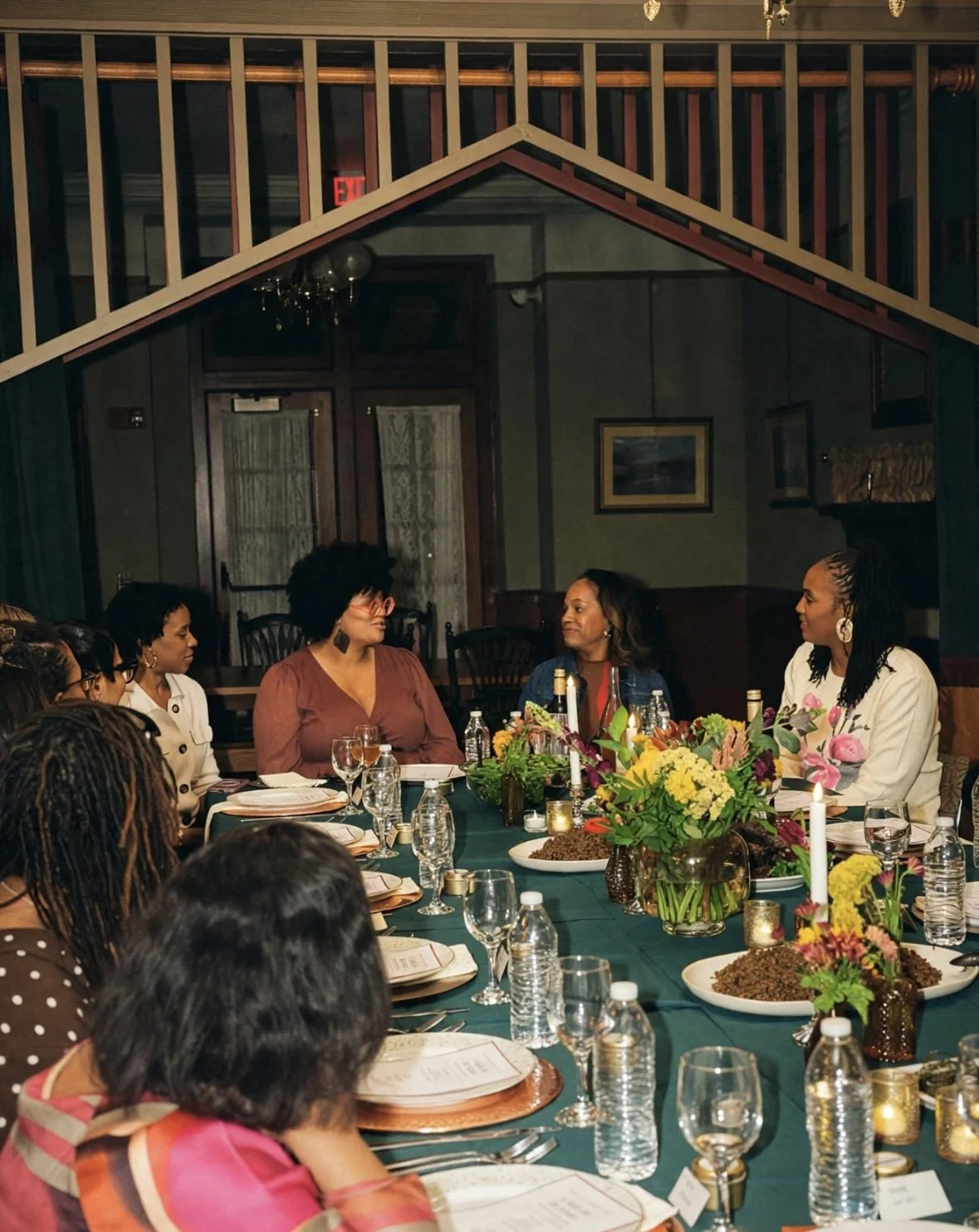
That distinction became clear to me two weeks ago, outside of a client project entirely. I co-hosted an intimate dinner party, A Table for the Senses, with my friend Jennifer Dent Brown at a historic home in Bryn Mawr, Pennsylvania. We built the evening the same way I build a client's home: starting not with what would look beautiful, but with what the people in that room needed to feel.
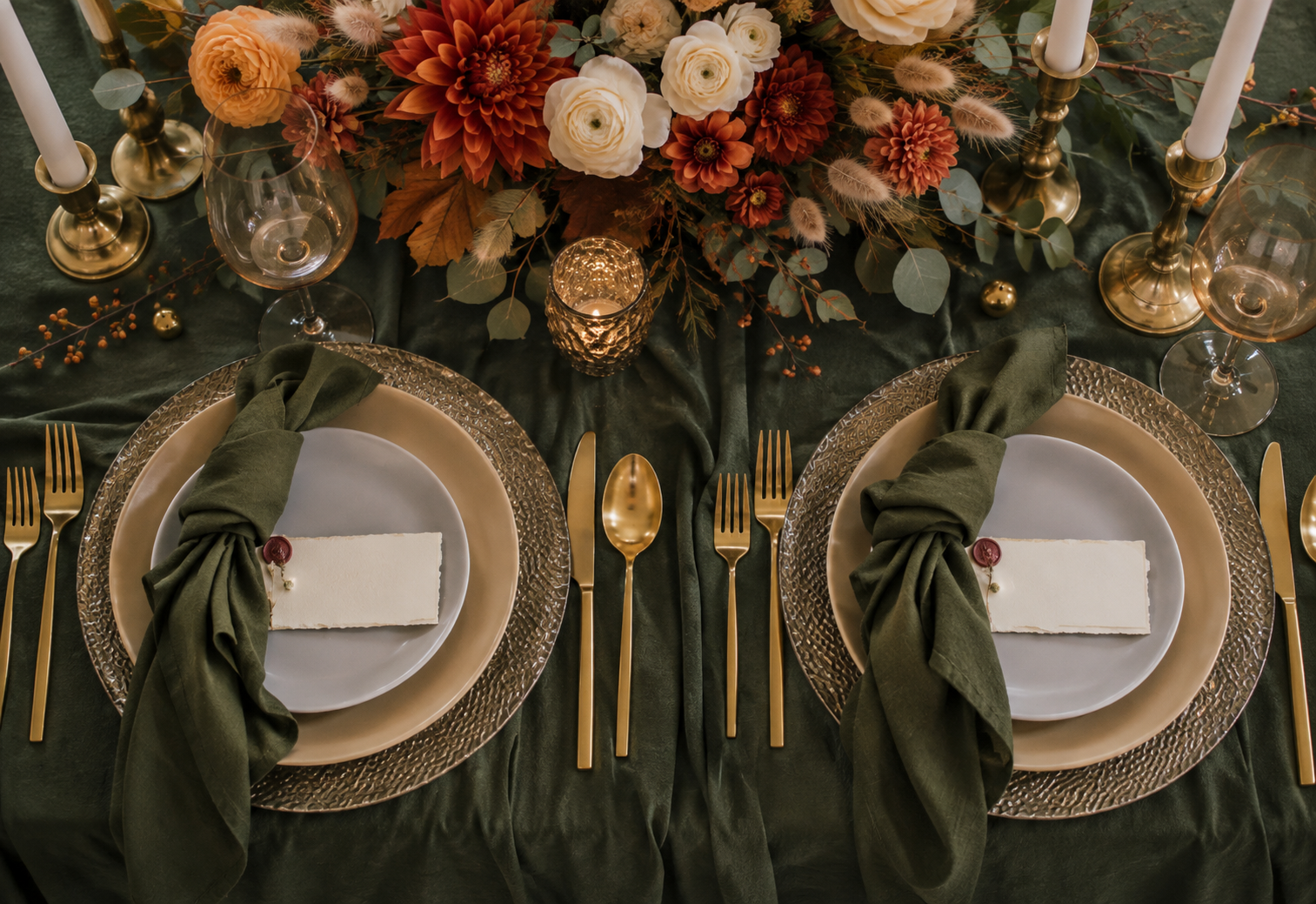
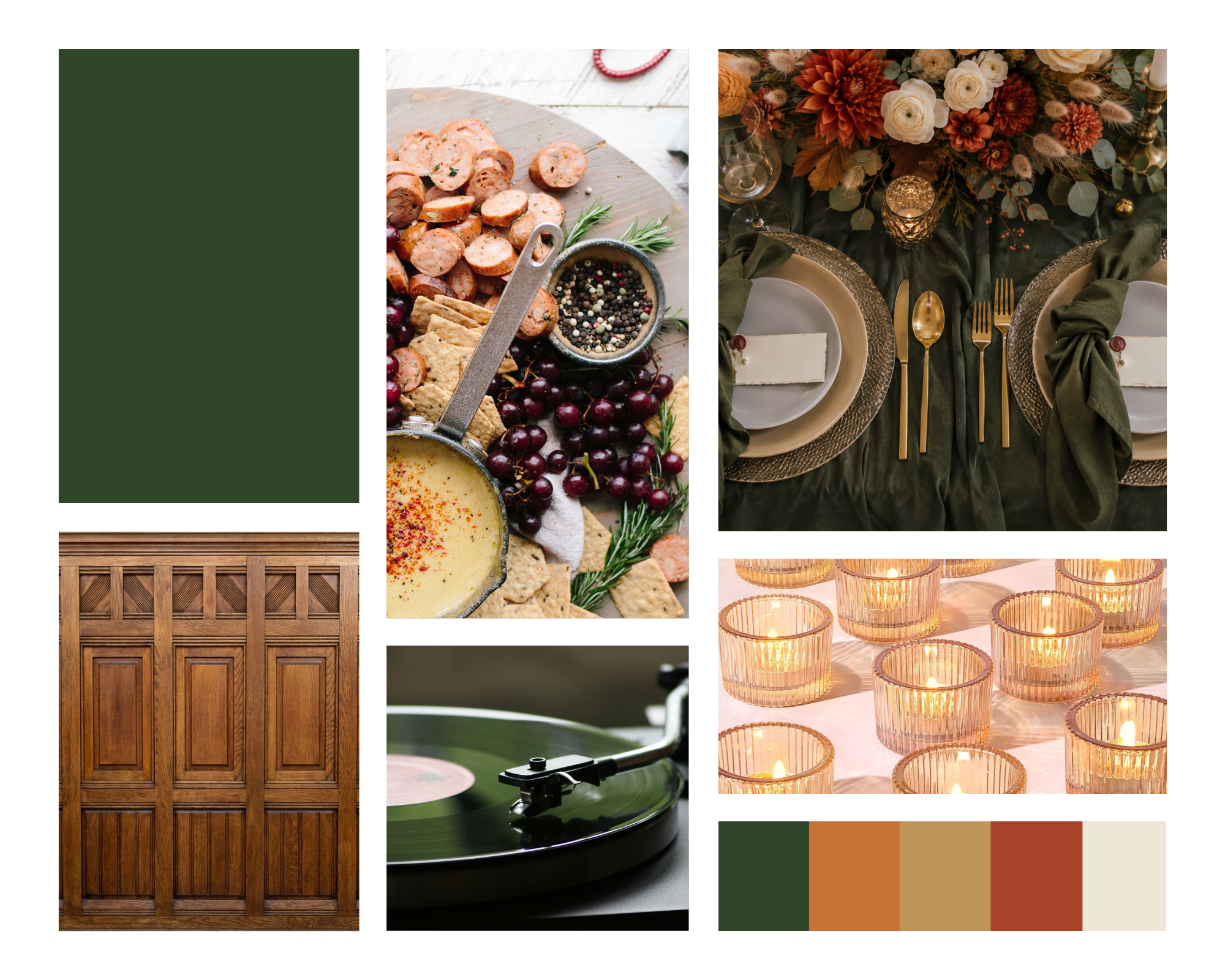
Every choice carried intention. The colors, green for growth and gold for prosperity, were chosen for what they meant, not just how they paired. The food told a story tied to heritage. Guests received a moodboard and a playlist in the days before the dinner, so the experience began before anyone arrived. By the time they sat down, they weren't walking into an event. They were stepping into something they already felt part of.
…people don't remember the sofa fabric or the exact shade on the wall. They remember how a room made them feel the moment they walked in, whether that room is a dining area set for one evening or a home they'll live in for a decade.
The response confirmed what I've believed about design for years: people don't remember the sofa fabric or the exact shade on the wall. They remember how a room made them feel the moment they walked in, whether that room is a dining area set for one evening or a home they'll live in for a decade. One guest, who told us she usually dreads anything resembling networking, said this felt completely different. Another called it the most relaxing part of her week.
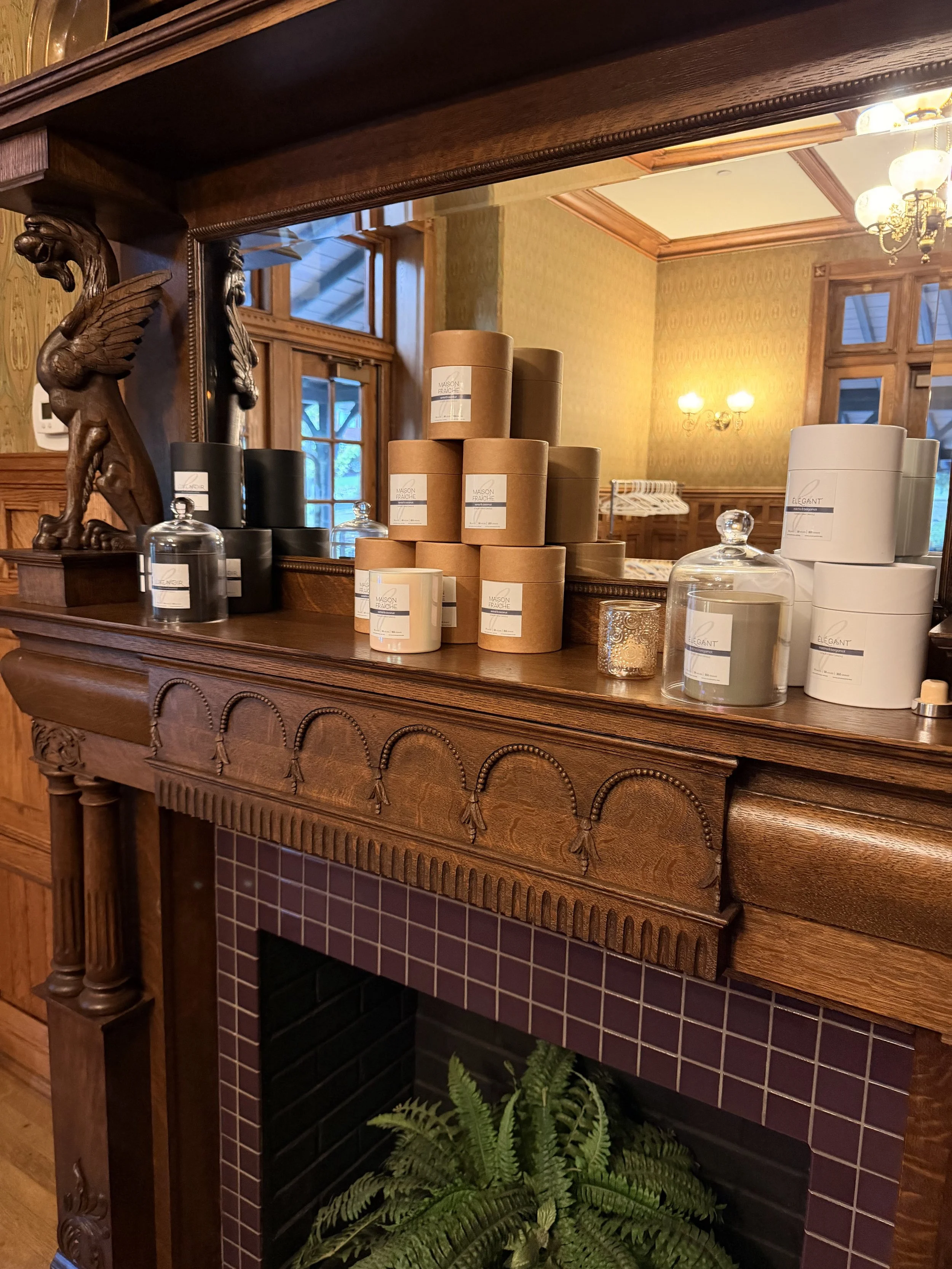
Even the scent in the room was chosen on purpose, a quiet layer most guests couldn't name, but would have noticed the moment it was missing.
That's not decoration but design with a purpose behind every decision. This is the approach I bring into every home I work on. The furniture, the palette, the layout: none of it exists for its own sake. It exists to serve how the people living there want to feel, every day, in their own rooms.
If that's the kind of intention you want brought into your own home, I'd love to talk about what that could look like for you.
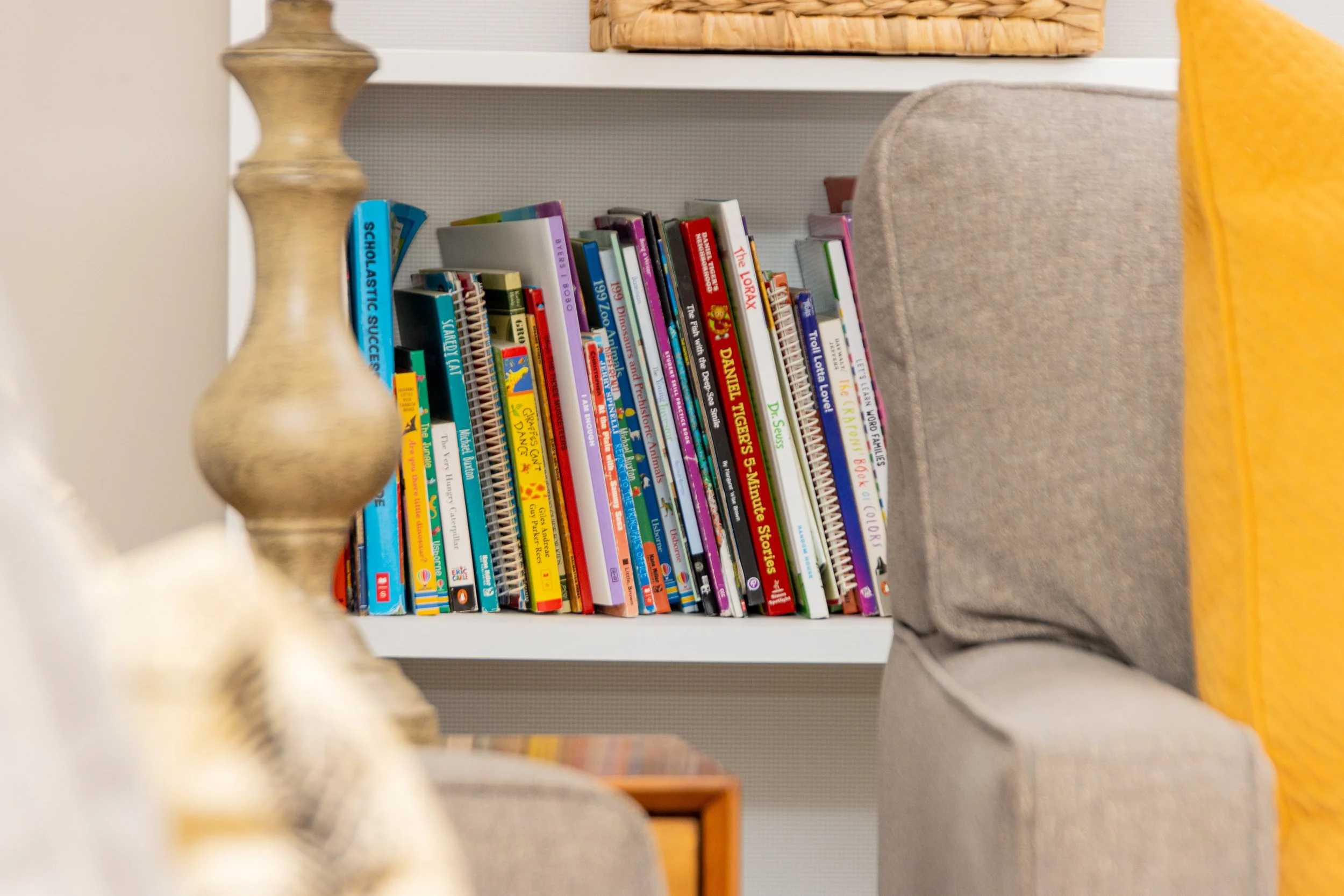
Before You Buy the Backpacks, Look at the House
August hands every mother the same short list. Pencils. New sneakers. Physicals. Sports forms. Whatever the school portal decided needed to be filled out by last Tuesday. We spend three weeks getting our kids ready for the year and somehow never ask if the house is ready for them.
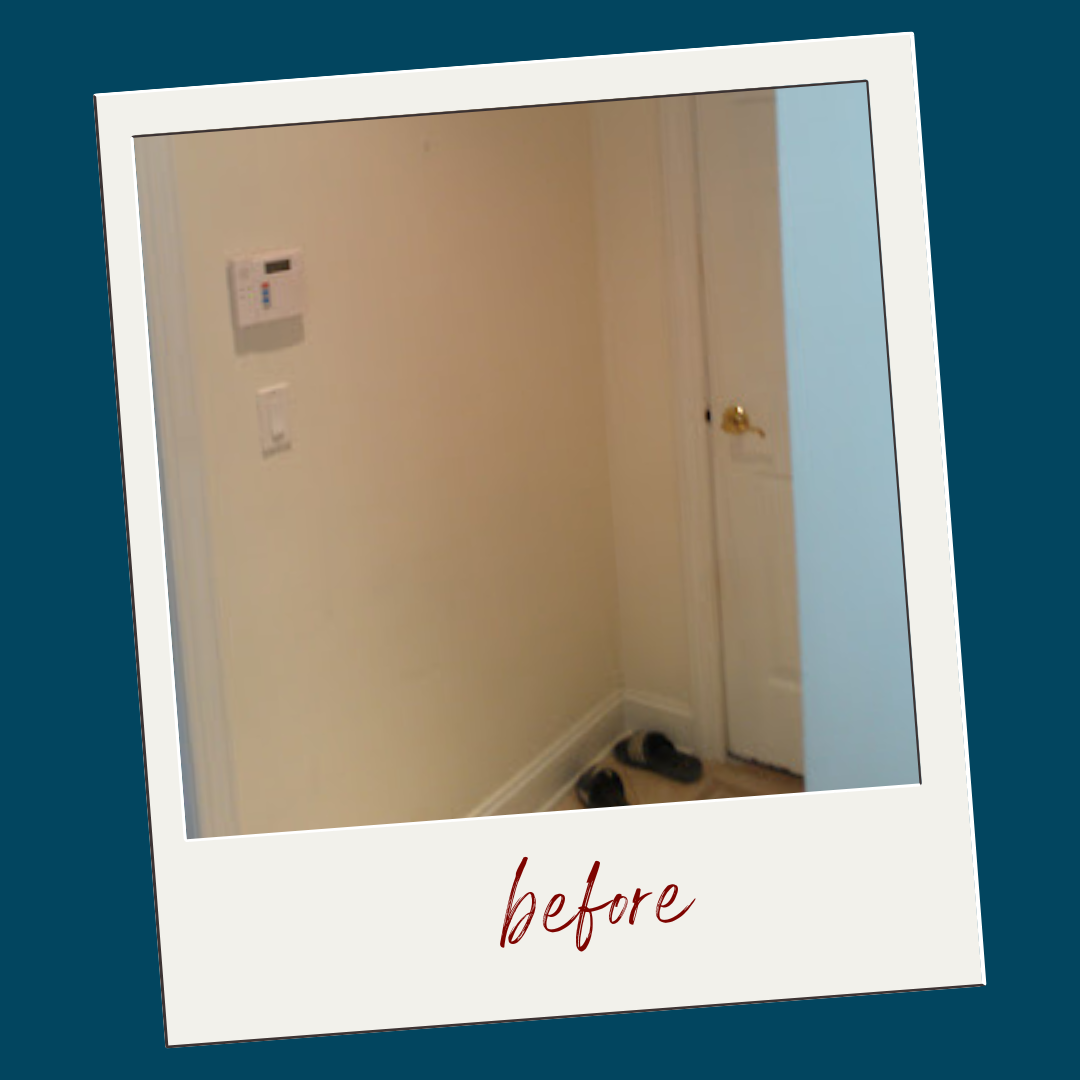
Before image of mudroom hallway
A client called me this summer sounding worn thin before the year had even started. Wife, working mother of three kids, each with a different strength, a different pace, a different way of doing things. She has never treated her home as a project worth investing in. Trips, the kids' activities, the family's future, those got the budget and the attention. The house was always going to get destroyed anyway, so why put money and thought into something three children were just going to undo by dinner.
But she's spending more time home now, and the chaos she used to move past without noticing started to feel like something she was living inside of. Nobody put anything back. Nothing had a place, which meant everything required her. "Mom, where's my cleats." "Mom, have you seen my folder." Over and over, in a house where she was the only system anyone trusted.
That's not a clutter problem. That's a structure problem, and the two get treated the same by most organizing advice out there, which is part of why the advice doesn't stick.
There Is No One System
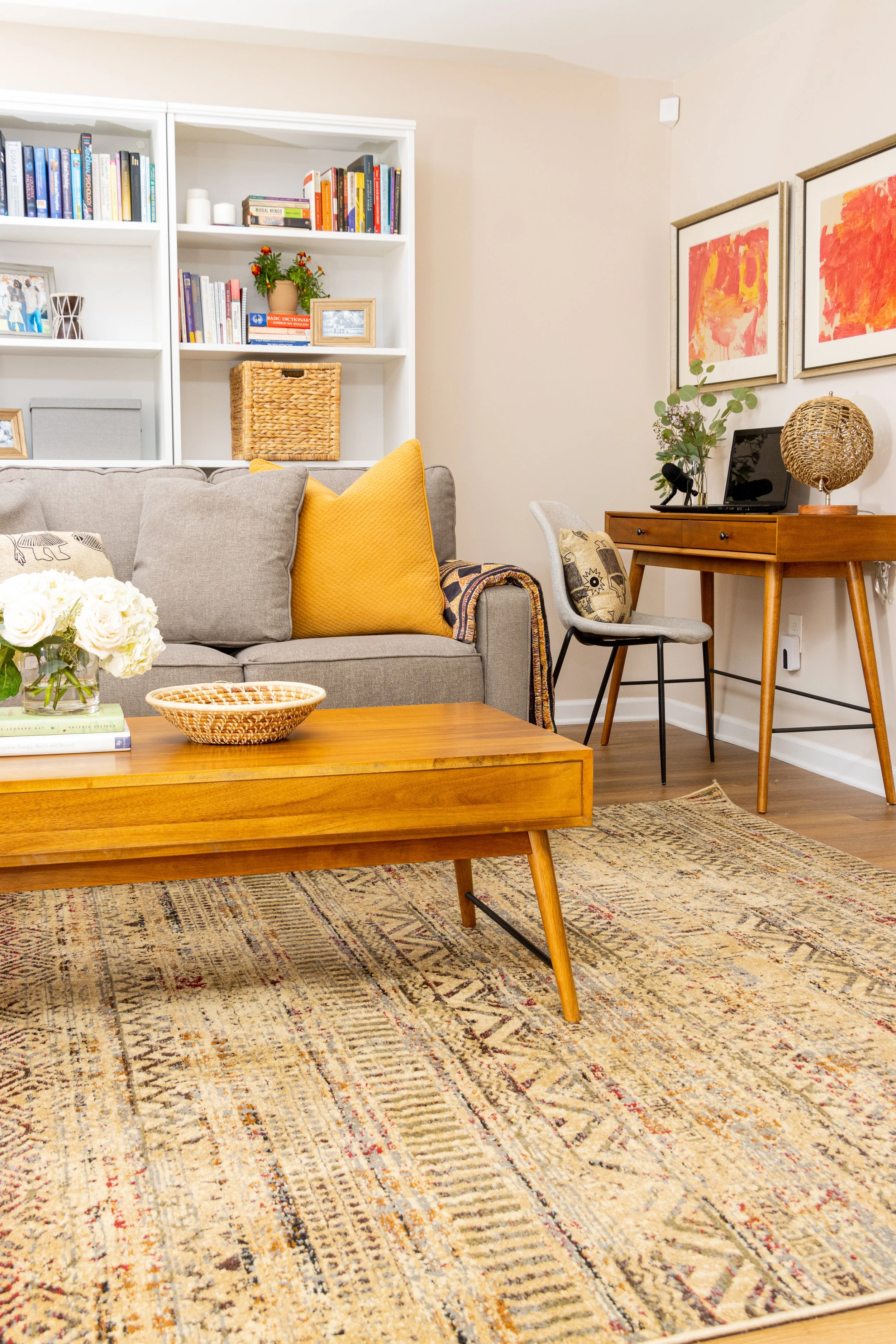
I did a full walkthrough of her home, room by room, and handed her an assessment with what I saw and what could shift. She told me afterward that it felt honest, nothing softened or hidden, and that she still walked away feeling like the decisions were hers to make. Then she said something I haven't stopped thinking about: every mother needs a plan for her home before school starts, the same way she has one for her kids.
I agree, with one condition. That plan can't look the same for two families, because it can't even look the same for two kids in the same family. I've talked with homeschool mothers who structure their whole first floor around the rhythm of their day, school and meals and play folding into each other by design. I've worked with families where the answer was the opposite: a bedroom desk for the kid who needs to close a door, a shared table for the one who does better with noise around her. Neither is right. Both are right for the kid standing in front of you.
The starting question isn't "what's the best homework station." It's "how does this particular family move through this particular house." Where do backpacks land the second everyone walks in. Where does the actual eating happen versus where the table sits. Which kid needs a wall to face and which one needs to see the room. You can't answer that from a catalog. You answer it by watching your own family for a week and being honest about what you see, not what you wish you saw.
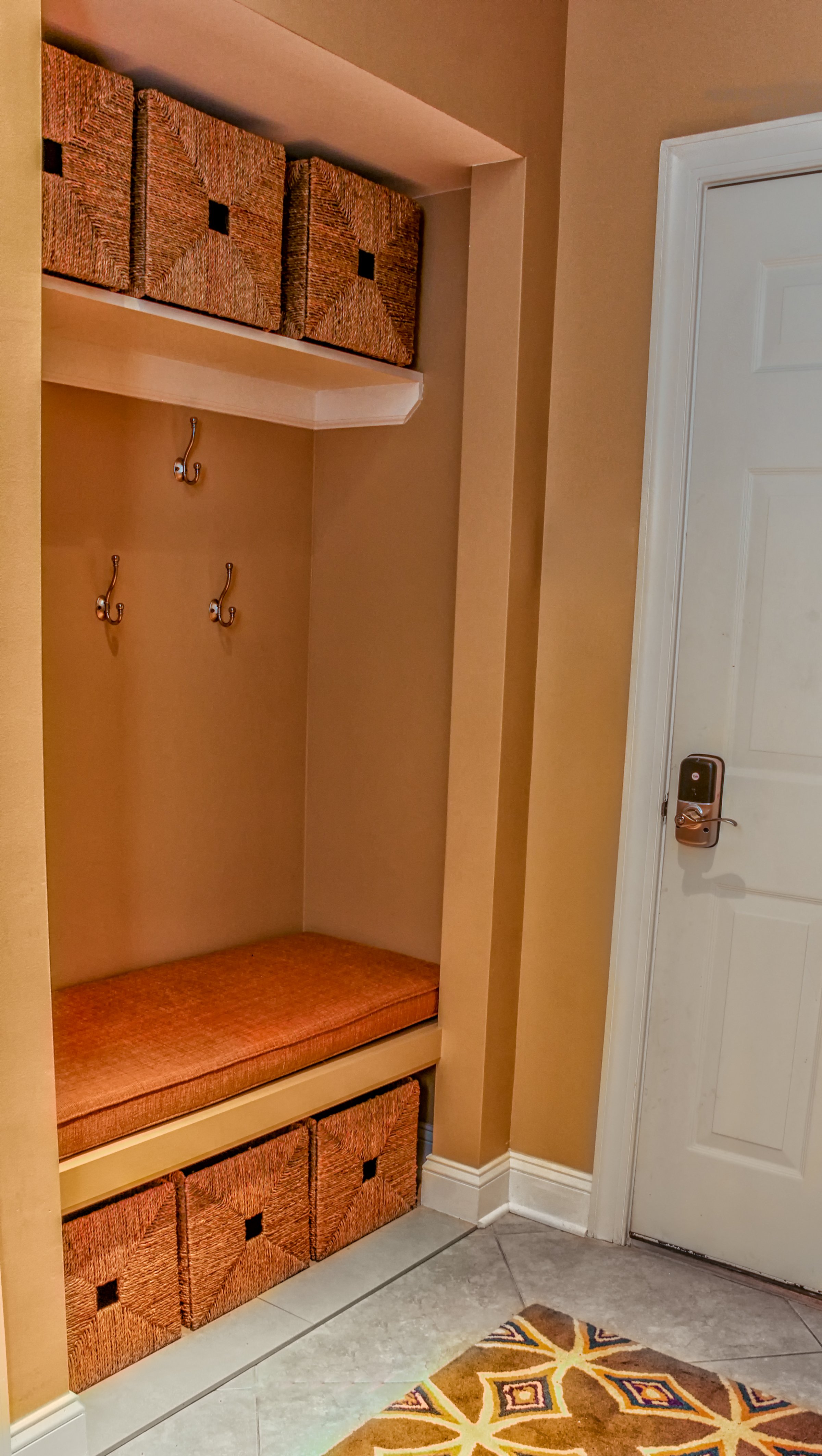
After photo of mudroom hallway
Editing Never Finishes
Something else worth saying plainly: getting a home ready for a new school year isn't a weekend project you check off once. It's an edit that keeps happening, because your kids keep growing out of who they were in June. The bin of toddler toys, the changing table still in the corner, the desk that fit a seven-year-old and now houses a twelve-year-old's knees somewhere near his chin. Furniture and belongings that once served a real purpose can quietly turn into things that just take up floor space while doing nothing for the people living around them.
Walking a room and asking "does this still work for who my kids are right now" is a habit, not a task. Some families do it every August. Some do it every time a school year ends and a summer begins. The frequency matters less than making it a rhythm instead of a rescue mission you only run once the house has already gotten away from you.
What This Looks Like in My Own Family Room
I'm doing this in my own house right now, specifically the family room, and my two kids organize nothing alike. One puts things away if there's a clear spot for it. The other needs the spot to be visual, or it doesn't exist to him. So the room is built around both of them, not around a single idea of what a homework station should look like.
There's a central spot for homework, close to a bookcase stocked with art supplies, books, and magazine files that hold loose worksheets before they turn into a pile on the counter. A round table with four or five seats so more than one kid, or a friend, can work at once without anyone feeling stuck at a desk alone. Artwork goes up on the wall, theirs, not something bought to match the room. And there's a command wall by the door: hooks for backpacks at kid height, a board for the permission slips and calendar pages that otherwise live in the bottom of a bag until it's too late.
None of that is a formula to copy exactly. It's what our flow needed. Yours will ask for something else.
Small Systems That Teach Big Things
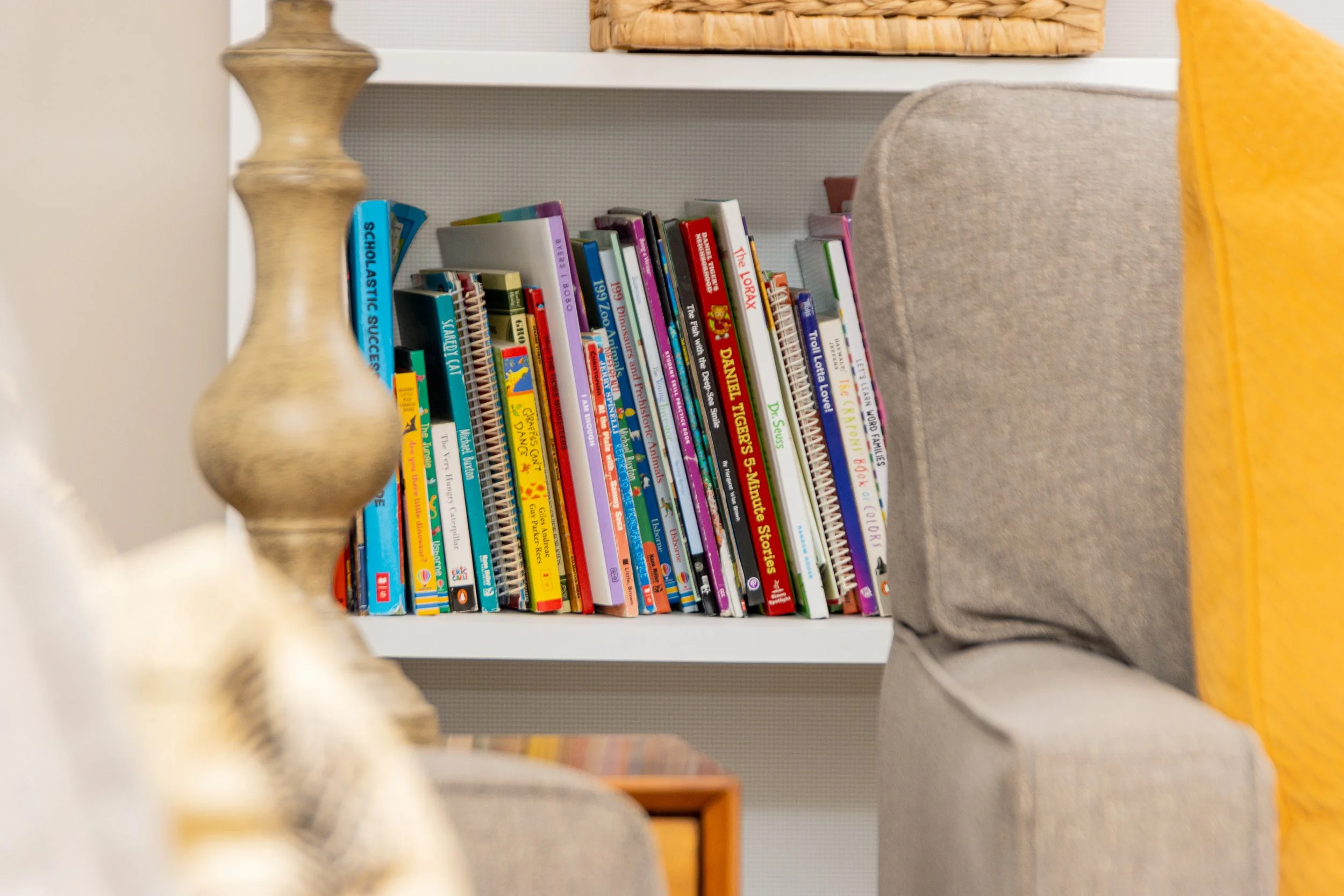
The best home systems don't just create order, they teach kids to be the ones who maintain it. A bookshelf arranged by color instead of by author sounds decorative until you watch a six-year-old find and return a book without asking anyone for help, because "the orange one" is a system a six-year-old can actually use. Labeled bins with pictures instead of words do the same for a kid who isn't reading fluently yet. A chore chart that's a permanent fixture instead of a poster nobody revisits does the same for the ten-year-old who is capable of far more independence than she's usually given credit for.
The goal isn't a house that looks organized for a photo. It's a house where a kid can find what he needs and put it back without a parent standing over him. That's what buys back a mother's evenings, not another bin.
Beyond Organizing: The Room Itself
Function matters most, but the room still has to want to hold you. A wall color that's felt tired for two years, a gallery wall that stopped being edited around the time your youngest started school, lighting that leaves a homework corner dim by four in the afternoon come November. These aren't separate from the organizing conversation. A room that looks cared for tends to get treated like it's worth caring for, by everyone in the house, including the kids.
And seating doesn't have to be a chair. Some of the best homework setups I've built use a bounce ball instead of a desk chair for a kid who thinks better in motion, or a low bench instead of stools so a nine-year-old can shift positions ten times in an hour without anyone calling it fidgeting. Structure and stillness aren't the same thing. A room can hold both.
Where to Start
You don't need a full renovation before the first day of school. You need one walk through your own house, paying attention the way you'd pay attention to anything you actually wanted to understand. Where does the day break down. What gets left where it shouldn't. What's been outgrown and never removed. What would change if every person in your house, not just you, knew where things belonged.
That's the plan. Not a Pinterest board. A house that finally works the way your family lives in it.
If you want that walkthrough for your own home, a Design Home Assessment starts there.
A Home That Holds You
A few weeks ago, I said something out loud that I don't usually say.
I was telling a friend about the work that I do - not the paint colors, not the before-and-afters, none of the parts people usually ask me about. I told her the real reason I do this: I design homes to hold the women who live in them.
She got quiet for a second. Then she said, "You need to talk about that more. I don't think people really know that's what you do."
She was right. And it stung a little, because it meant I'd been hiding the truest part of my work behind the parts that are easier to photograph.
So here it is, plainly, the way I told her.
I design sanctuary-feel interiors for busy women. For mothers, founders, professionals - women who carry a lot, all day, for everyone else.
My job isn't to make your home look impressive. It's to make it a place that meets you at the door and says, you can put it down now.
Most design talks to your eyes. I want to talk to your nervous system.
There's a difference between a home that photographs well and a home that regulates you. You already know the difference, even without the language for it. It's the difference between walking into a room and feeling your shoulders creep up toward your ears and walking into a room and feeling your exhale arrive before you've decided to take it.
Beauty isn't the wrong goal. It's just not the whole goal. The whole goal is a home that does some of the holding your nervous system has been doing alone all day.
For the women I work with, that holding matters more than almost anything else in their life right now. You're the one who notices everyone else's needs before your own including your kids', your team's, your clients', your household's. Nobody is checking in on whether the room you actually live in is doing anything for you. So the home has to.
What nervous-system-aware design looks like
It's not a mood board of neutrals and a pretty furniture. It's specific, and it's practical.
The room you enter first. Most homes greet you with mail, shoes, bags… decision fatigue before you've even set your keys down. A true threshold does the opposite: it gives your body a two-second cue that you've arrived somewhere safe. Sometimes that's as simple as one object you touch on your way in - a bowl, a dimmable light switch, a color that only lives in that spot.
The colors you keep avoiding. Color is the fastest, least expensive way to shift how a room feels on your body and it's the thing most women get wrong first, not because they have bad taste, but because no one ever taught them how undertones behave in real light. The color you keep talking yourself out of is usually the one your body wants.
One ritual object, protected. A chair no one else sits in. A specific mug. A candle you only light for yourself. It sounds small. It isn't. Ritual is how a nervous system learns a room is safe to soften in.
None of it requires a full renovation. It requires intention, which is the one thing busy women have the least spare capacity for, and the one thing I have the most capacity to bring.
This isn't abstract
I've had a client tell me that changing the lighting in her home helped her manage her vertigo. Not decorate around it but manage it. That's not a coincidence. Your nervous system reads a room before you consciously register anything about it: the temperature of the light, the weight of the color on the walls, whether a space feels like it's closing in or holding you up.
I come by this honestly. My mother and grandmother were noticers, women who paid attention to beauty other people walked past. I think what I do now is an extension of that: paying attention to what a room does to the body, not just to the eye.
A lesson from my summer reading
I've been making my way through Never Eat Alone and The Art of Gathering this summer, and one idea from Priya Parker has stayed with me. She talks about the threshold - the specific, deliberate moment someone crosses from "out there" into a gathering. She argues most hosts never design that moment on purpose.
Neither do most homeowners.

I'm in the very early stages of thinking about what that means for the women I design for - not just how they gather other people, but how they gather themselves at the end of a day. More on that soon. For now, I'll just say: the door you walk through every single day deserves the same intention you'd give a dinner party.
Three things you can do this week
Notice which room in your house makes your shoulders drop and which one does the opposite. You already know the answer before you finish reading this sentence.
Name the one color you keep circling back to and talking yourself out of. Ask yourself honestly why.
Reclaim one square foot that belongs to no one but you. A chair. A shelf. A windowsill. Protect it.
Where to start, if this is landing for you
You don't need to redo your whole house to start regulating it. Color is the single fastest way to shift how a room holds you - it's the entry point I built the Color Palette Guides for. Coastal Calm and Seaside Breeze are both live now: twenty pages each, walking you through exactly which tones do this kind of work and how to use them in your own home, room by room, without guessing.
Explore the Color Palette Guides →
Here's the truth: you don't need a full design engagement to start feeling different in your own home. You need one room that finally holds you the way you hold everyone else.
Because home shouldn't be another place where you perform. It should be the place where you finally get to rest. Trust what makes you exhale.
Sabine
Book links above are Amazon links. As an Amazon Associate, I earn from qualifying purchases — at no extra cost to you.
Create a Home That Helps You Recover From the World
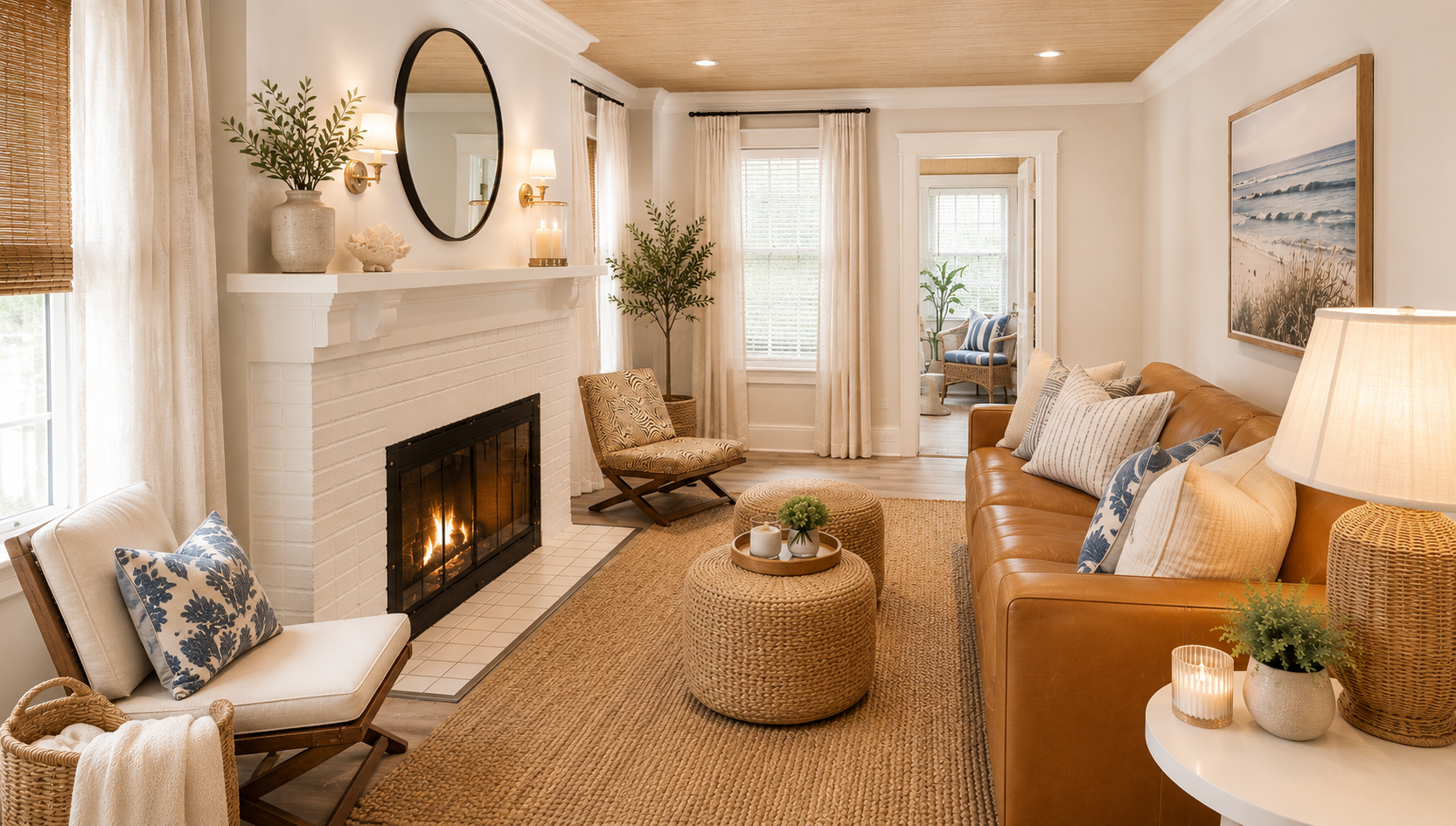
There was a moment in a movie I watched recently that I haven't been able to stop thinking about.
Two characters are standing in a beautiful home with custom built-ins decorated with books, warm light, a room that feels like a family lives there. One of them looks around and says, you're a reader. And the other one laughs. No, he says. Those aren't real books. The interior designer put them there.
I sat with that for a minute. Because as a designer, I’ve absolutely styled with books. I love incorporating coffee table books, art books, vintage finds, and collected pieces into a room. Books bring texture, color, personality, and visual weight to a shelf or coffee table. They help a room feel layered and lived in.
But there’s a difference between styling with books that add beauty and creating an entire library for someone who doesn’t read. One enhances the story of a home. The other invents one. One is design. The other is theater.
And I think that distinction is at the heart of why so many people feel exhausted by their own homes.
Why Lived-In Looks Are Having a Moment
The return of warm, collected, character-filled homes. Rooms with family heirlooms, shelves that tell a story, layered textures, and pieces gathered over time. There's a reason all of it is having a cultural moment right now and it isn't just trend cycling. We are collectively over the pristine and generic.
After years of white walls and perfectly staged, magazine-ready rooms that photographed beautifully and felt like nothing, people are craving warmth. Realness. The feeling that someone lives there. That the home has a story. I believe that craving is actually a nervous system response.
Your nervous system is always reading your environment. It’s paying attention to the details around you from the colors, the lighting, the textures, the memories, and the pieces that remind you this is your home.. A perfectly styled room may look beautiful in a photo, but if there’s no connection to your life, it can feel empty. A home shouldn’t just impress you when you walk in. It should help you settle, breathe, and feel like you belong.
The lived-in look is popular right now because people are unconsciously searching for homes that feel safe. Homes that exhale.
But here's where I want to complicate the conversation.
The Trap of the Trend
The mistake I see, and I see it constantly, is people adopting the aesthetic without doing the inner work of asking: Does this reflect my life and how I function in my home?
The library is a perfect example. Libraries and home studies are trending. So people build them. Curated shelves, rolling ladders, beautiful leather chairs. Stunning. And if you love books, if you enjoy reading (or aspire to), if books are part of how you relax and restore yourself - then yes, absolutely, a library is a room or wall that will support your nervous system every single day.
But if you don't love to read? If the books are props and the room never gets used? That room is not regulating you. It's performing for guests. And your home deserves to do more than perform.
What a Nervous-System Home Looks Like
I want you to sit with a question: What do you really do when you want to come home and exhale?
Not what you think you should do. Not what looks good. What do you actually do?
If you love playing cards and board games with people you love - you need a game room. A real one, with a card table that looks like a beautiful piece of furniture and comfortably styled chairs and essential lighting with a place to store your games so they're accessible.
If you watch movies the way some people practice meditation (fully present, transported) you need a proper movie room. Not a TV in the corner of a room designed for something else, but a large TV or projector on a dedicated wall with dimmable lighting, lounge seating, and a number of small drink tables just large enough for a drink and maybe a snack.
If movement is how you release stress, your home should have a room (or area of a room) for a home gym. Even a modest one. Even just a dedicated corner with a sleek rack for your stored away mats, one or two exercise equipment, and a large mirror somewhere. The point is that your body has somewhere to go.
This is what it means to design for your nervous system. Not a trend. Not a therapy buzzword. It’s the intentional choice to create a home that reflects the rhythm of your life - how you rest, gather, create, recharge, and connect.
Beauty matters. But beauty becomes more powerful when it has a purpose. A home should not only be something you admire. It should be something you experience.
Color Is Part of This Too
One of the most overlooked ways your environment speaks to your nervous system is color.
Not color as decoration. Color as an atmosphere.
This is exactly why I spent so much time reimagining and expanding my signature color palette collection, starting with the reintroduction of Coastal Calm and Seaside Breeze, just in time for summer.

Both color palette guides were built around a specific feeling, not a specific trend. Coastal Calm was designed for the woman who wants her home to feel like the hush of an empty beach house off-season - quiet, grounded, settled. Seaside Breeze is for the woman who wants something softer and more alive - like a garden by the sea when the first real breeze of summer comes through and you want to open every window.

Each guide is a full 20-page designer companion: six curated colors with designer notes on undertones and where to use them, two mood splits showing how to weight the palette for different feelings in a room, coordinating finishes, room-by-room application, the most common mistakes to avoid, and a shoppable LTK collection so you're never guessing.
Because your palette should do more than look pretty. It should tell a story, create a feeling, and turn your house into a place you truly love coming home to.
Waitlists are open now for early access and early-bird pricing for the first 48 hours after launch.
→ Coastal Calm — Join the Waitlist → Seaside Breeze — Join the Waitlist
“Stop designing for the trends. Start designing for the way you live.”
Your home is the environment your nervous system lives in every single day. It shapes your mood before you've had your first cup of coffee. It either helps you recover from the world or quietly adds to the load.
That's where the real beauty is.
Ready to start building a home that actually works for you? Start Your Design Path →

7 Mothers on What Grounds Them at Home

There's a particular kind of tired only mothers know.
Not the tired of a hard day at work. Not the tired of a bad night's sleep. The tired of having held everyone emotionally, logistically, and lovingly while still trying to hold yourself. The tired that doesn't end at 5 p.m. because motherhood doesn't clock out.
And every Mother's Day, we get told we deserve a spa day, with brunch afterwards, or a beautiful bouquet. Something pretty, wrapped up, with a card.
I love a bouquet. But this year, I wanted to ask a different question.
I wanted to know what holds us when the bouquet is gone. What roots us back into our bodies when the day has pulled us in seventeen directions. What's waiting at home - not as a luxury, not as a reward, but as a quiet, daily reset.
So I asked a small group of mothers I admire one question:
What's one thing in your home that grounds your nervous system at the end of a long day?
The answers came back tender, honest, sometimes funny, always specific. None of them said "a spa day." All of them said something about home. And reading them together, I realized our homes are doing more for us than we give them credit for.
Here's what they said.
"It's not even just the end of the day. It's all of the times."
Nicole Peraino, mortgage broker & advisor, mother of one fun toddler | Philadelphia, PA.
Nicole's answer caught me off guard in the best way. She named what every mother knows but rarely says out loud: the nervous system isn't just frayed at night. It frays all day long.
For her, the things that bring her back are small and specific. Photos of her daughter, her family, her wedding day, her newborn arranged in a collage her husband hung with care. "They look really nice. Beautiful memories," she said.
There's a viral wave-projection light next to her yoga mat on the third floor. She turns it on before bed and lets the soft motion settle her mind.
And then there's the espresso corner in her kitchen with an espresso machine, coffee beans, a little faux plant, a setup for making lattes with steamed milk and latte art.
"It's a cute little coffee station," she said. "That brings me a little bit of joy and happiness."
Reading her answer, I noticed something. None of Nicole's grounding objects are the room everyone admires when guests walk in. They're a wall of photos. A light. A coffee corner. Chosen. Placed. Within reach.
Home grounds us through the small, intentional things we put within reach.
"Having us all together is where I feel most grounded."
Suzette, co-host of Raising Kids, Raising Glasses podcast, mother of two.
Suzette's answer wasn't about an object at all. It was about a moment.
"At the end of a long day, what grounds my nervous system most is simply being present with my boys. The noise slows down, the phones go away, jazz music is usually playing in the background, and it's those little everyday moments together that bring me back to center."
"And when my husband walks through the door, seeing the joy on his face when he sees all of us together — that's my dream come true."
I read this and had to pause.
Because what Suzette is describing isn't really an evening routine. It's a home that has been arranged, intentionally or not, to hold a family's coming-back-together. The jazz playing. The phones away. The kids close. A home that has been quietly designed so that when her husband walks in, the first thing he sees is togetherness.
That's not an accident. That's the work of a woman who knows what her family needs to feel like and has built her home to deliver that feeling, on repeat.
Home grounds us when it has been arranged to hold the moments that matter most.
"Lavender. Eucalyptus. Lemon. Rosemary."
Eureka, physician assistant, mother of two | Havertown, PA.
Eureka's answer was the shortest of the long ones. And maybe the most precise.
"One thing that grounds my nervous system when I get home is turning on my diffuser and using calming essential oils like lavender, eucalyptus, lemon and/or rosemary for a fresh, clean scent."
There's something I love about a woman who works in healthcare choosing scent as her reset. She knows what the body actually needs. Lavender lowers the heart rate. Eucalyptus deepens the breath. Lemon and rosemary lift the fog of a long day.
She walks through the door, turns on the diffuser, and with one small ritual changes the air.
Scent is the fastest sense to reach the nervous system. Faster than sight. Faster than sound. It bypasses the thinking brain entirely and lands in the part of the body that decides whether or not we're safe yet.
A home that smells like calm tells the body: you can put it down now.
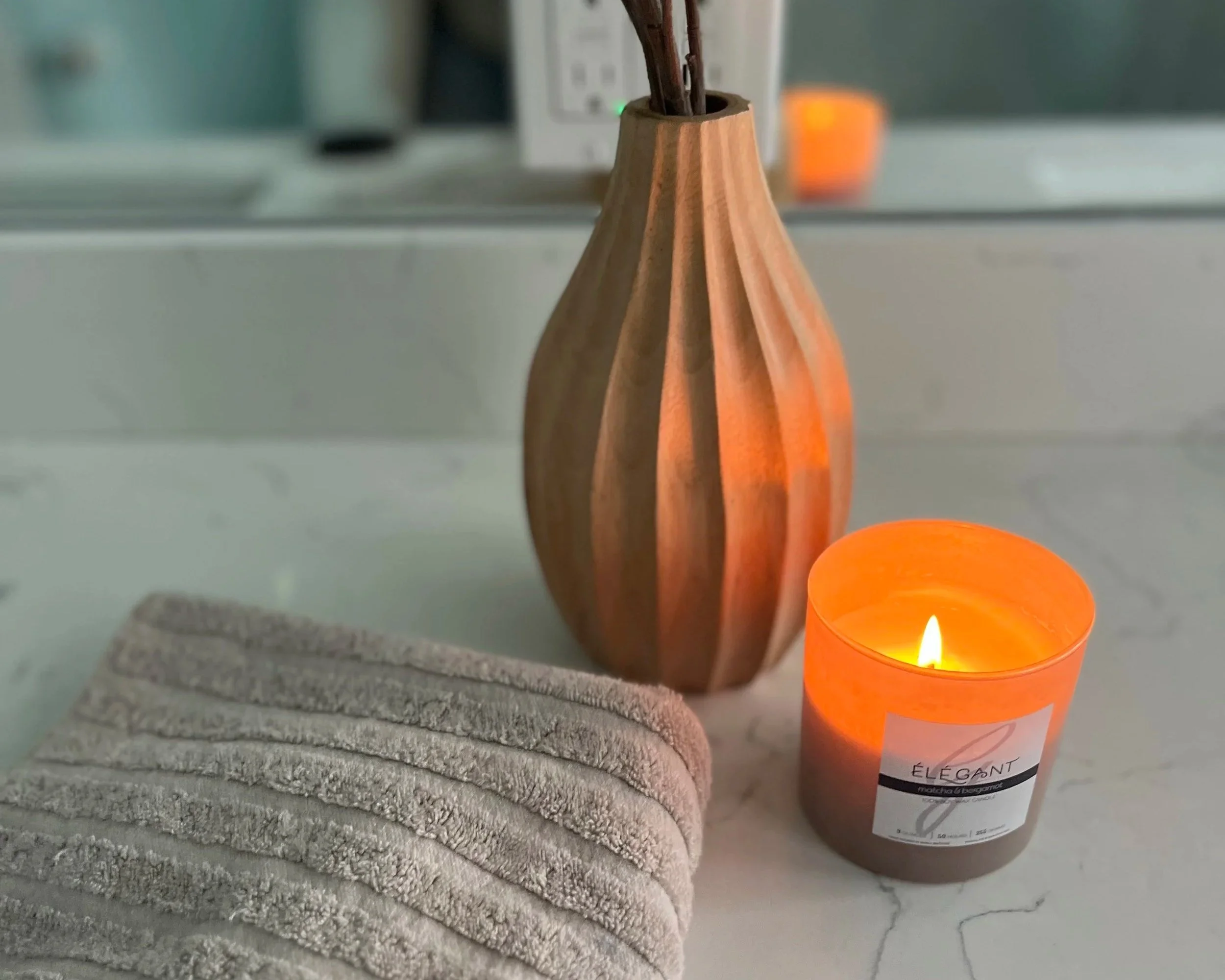
The Belfong Candle Collection. Hand-poured scent for the rooms that hold us.
This is one of the reasons I started The Belfong Candle Collection because I came to believe scent isn't a finishing touch in a home. It's a foundation. The way a room smells decides how the room feels, before we ever sit down.
Home grounds us when the air itself has been considered.

My family’s Friday night ritual: homemade popcorn with melted butter and Tajín Clásico Chile Lime Seasoning.
"Lights out, popcorn, no phones."
Sabine, founder of Georgette Marise Interiors, mother of 2.
For me, it's two things and they live in the same room.
The first is my deep-seated sectional in the family room. Deep. The kind of sofa you sink into. The kind of sofa where I take naps I didn't plan. The kind of sofa that has held more of my unwinding than any spa ever could.
The second is what happens on that sectional on Friday nights. Family movie night. Lights out. Homemade popcorn with melted butter and Tajín Clásico Chile Lime Seasoning (try it, it will change your life). The debate of whose turn it is to pick the movie always begins. My phone is put away. We watch as a family.
My son makes sure that if we miss it on a Friday, we have it on Saturday. He guards the ritual the way I guard our home.
Home grounds us when we let ourselves stop performing in it. When we let it be a place of rituals, naps, butter, and the people who know us best.
And then a few more women answered, and the conversation kept going.
Sherine, an attorney and mother of two, came home to her family room couch and a wall of photos:
"That area just decompresses me after a long day at work. I have a gallery wall on each side of the TV and I seriously find myself looking at the photos and feeling relaxed. Seeing all the photo shoots we've done."
The photos again. The faces of the people we love, framed and within reach. Twice now, mothers told me their families' photographs were what brought them back. Maybe the simplest grounding tool we have is being able to look up and see who we love.
Chinemelu, founder of Prodigy Peacebuilders Collab and mother of three, made me laugh out loud:
"It's definitely my back deck… and my front porch too… when the kids are inside"
A mother of three knows. Sometimes the room that grounds you is the one outside the room with all the children in it. I see this as a deeply intelligent act of self-preservation. A porch is a threshold. A deck is a doorway to the part of you that isn't anyone's mom. Every mother needs a square of square footage that's hers.
“A Land Where There is No Worry.”

“A land where there is no worry." Ayinké Hipps-Feit · @itsaaries
Ayinké Hipps-Feit, singer/artist and design enthusiast, mother of one, took me upstairs into a renovated mid-century:
"I love to spend time on the 2nd floor of my home in my reading/music nook. We renovated a beautiful mid-century home. This is where I go to relax and unwind. This nook filled with books and records takes me to a land where there is no worry. Just music or a beautiful story to read."
A nook with books and records. No worry. I think about that phrase a lot. So many of us have homes that are beautifully decorated and yet contain no room where worry isn't allowed. Ayinké has built one. Every mother deserves one.
What I noticed reading all of these answers
Seven different women. Seven different homes. Seven completely different answers.
But underneath, the same thing.
None of these mothers named a showpiece. They didn't name the room everyone admires when guests come over. They named the family collage in the kitchen. The light next to my yoga mat. The jazz playing when the boys are home. The diffuser and the clean scent of a Tuesday. The deep sectional. The popcorn ritual. The gallery wall by the TV. The back deck. The reading nook upstairs.
The objects were specific, but the function was identical: each one was a quiet anchor, placed within reach, that returns the nervous system to center.
Some of these things were investments. Some were small. That's not the point. The point is they were chosen deliberately and placed in the path of a woman's daily life so that her home could meet her where she needed to be met.
That's the difference between a beautifully decorated home and a home that holds you. Decoration fills space. Design holds a person.
That's what I do for a living.
If your home isn't holding you the way you need it to, that's something we can change together.
Start Your Design Path →
A different kind of Mother's Day reflection
This year, instead of a spa day, I'd offer this:
Walk through your home tonight. Notice what already grounds you. The chair, the corner, the photo, the lamp, the smell of the candle, the bowl by the entryway table. Notice how much your home is already doing for you, quietly, without thanks.
And if there's one thing you'd want to add, tweak, soften, or rearrange so that your home holds you a little better. That's the most meaningful Mother's Day gift you can give yourself.
Because the bouquet wilts. The brunch ends.
The home is what stays.
To the mothers reading: I'd love to hear yours. What's one thing in your home that grounds your nervous system at the end of a long day? Comment below. I'm gathering responses, and there may be a part two.
Happy Mother's Day. May your home hold you the way you hold everyone else.
With intention and love,
Sabine
Why Your Home Should Make You Feel Something and How to Design for It
She spends her days holding space for other people. Listening. Regulating. Helping them feel safe enough to fall apart a little and then put themselves back together. And when I asked her what she wanted from her own home, she didn't hesitate.
"I need somewhere that does that for me."
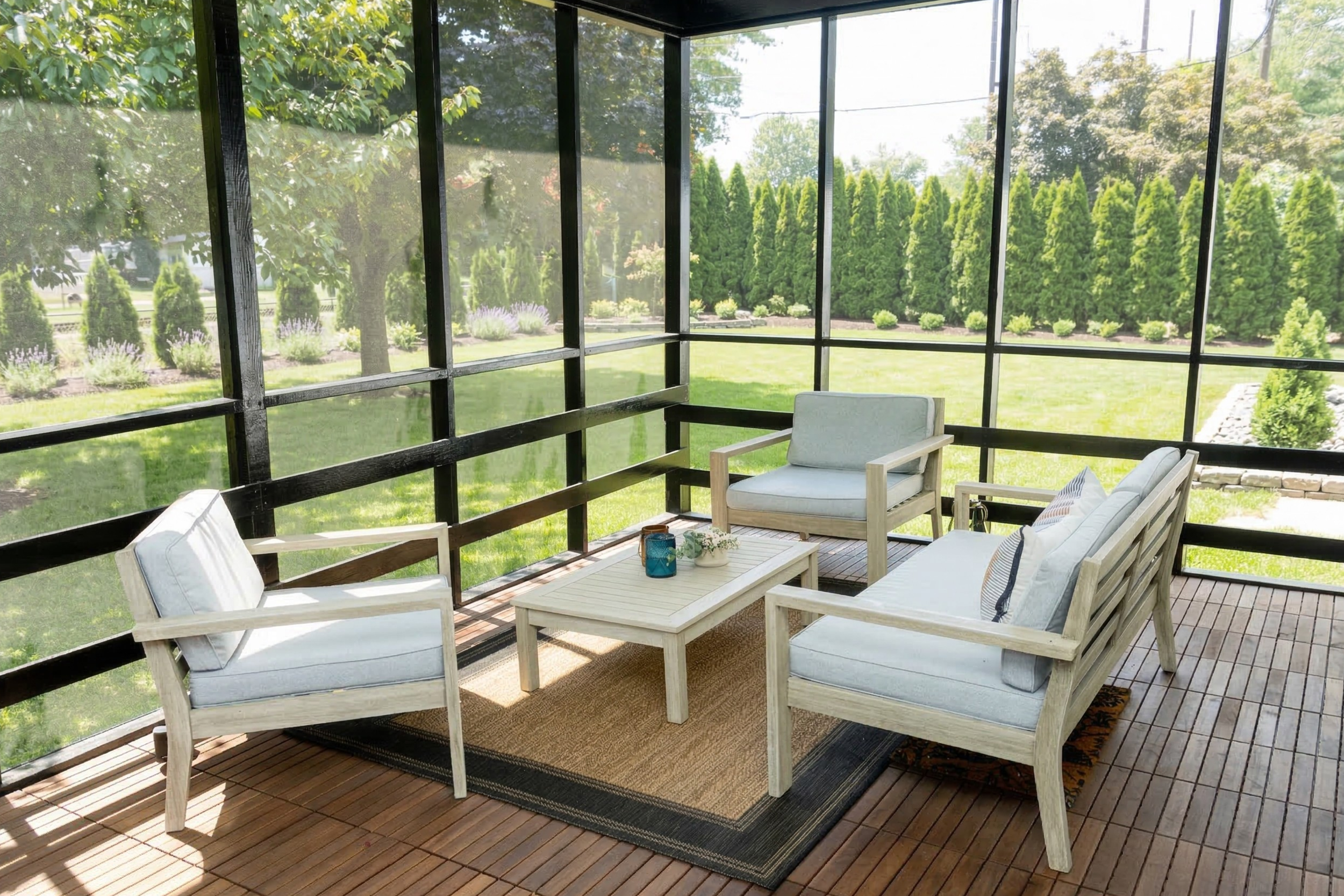
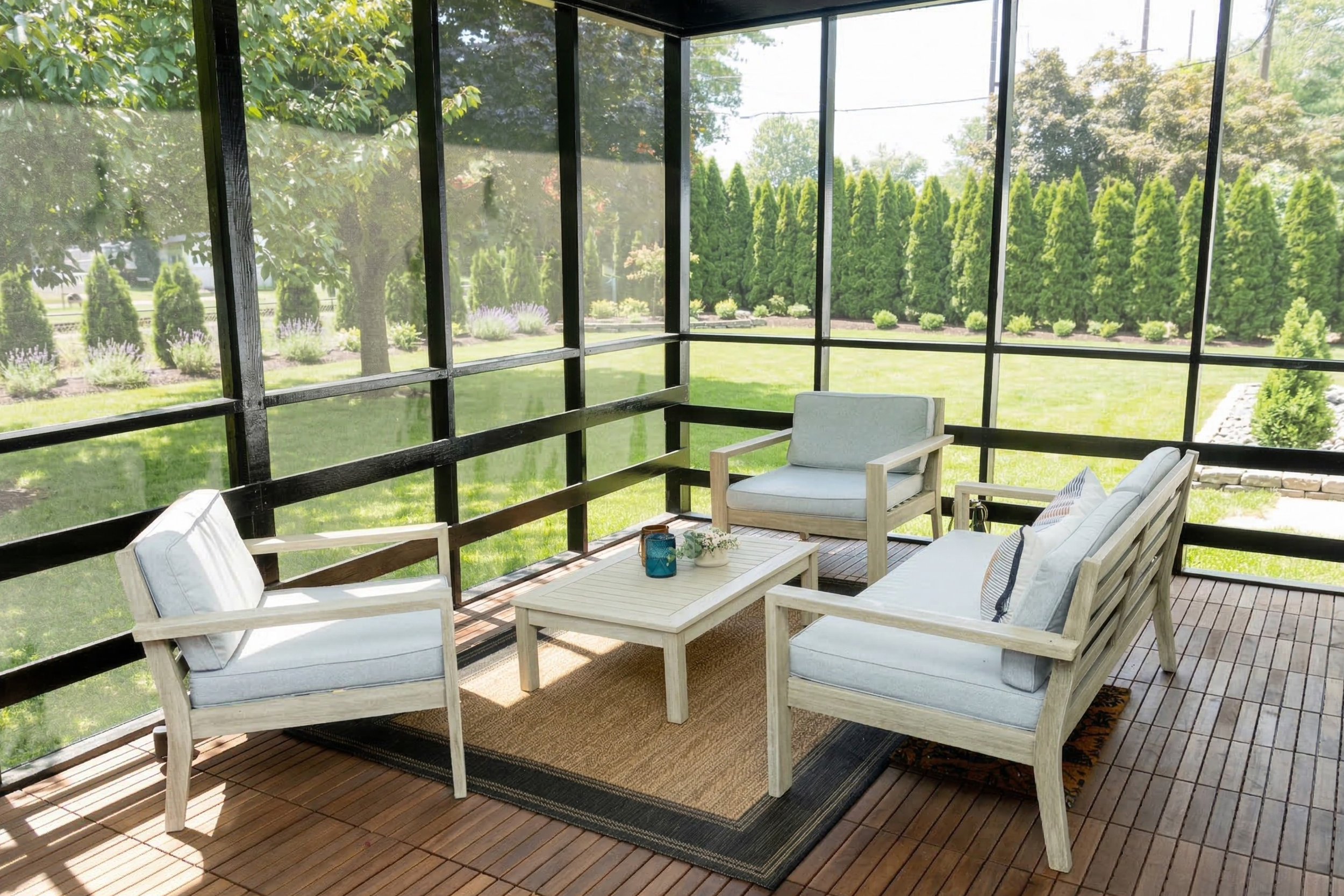
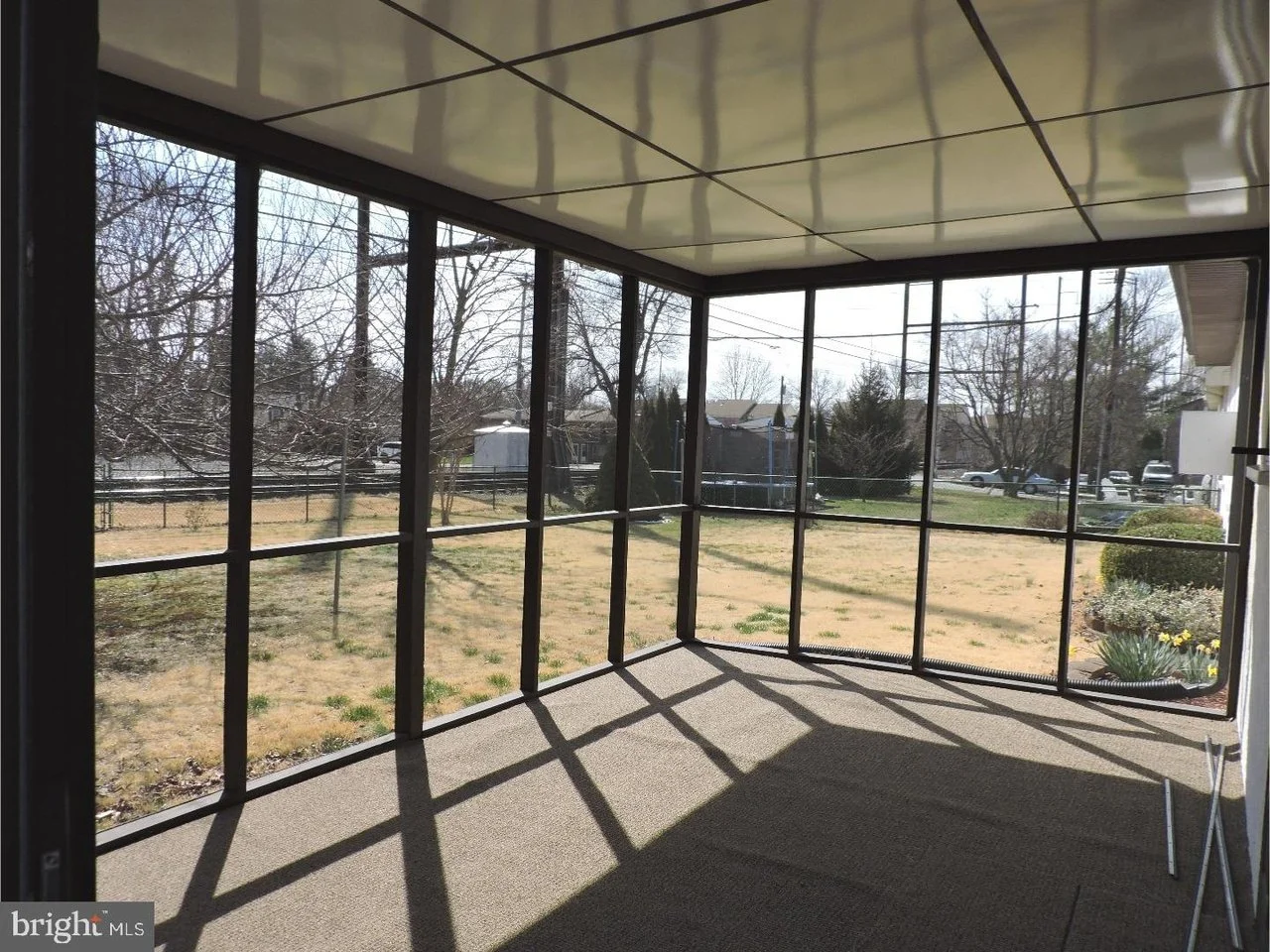
She's a therapist. And like so many of the people I work with who give enormously in their professional lives, she had almost nothing in her home that gave back to her. Her screened sun room sat mostly unused and damaged from a house fire - bare, cold, empty of intention. It had good bones and incredible natural light. But it felt like a room that didn't know what it was for.
We changed that. And what happened next is exactly why I do this work.
Pretty is easy. Feeling is the work.
Every client I work with starts by telling me what they want to see. The aesthetic, the palette, the style. But somewhere in our first real conversation, they say the thing that actually matters. "I want to feel calm when I come home." Or: "I want a space that's just mine." Or simply: "I want to feel something here."
Those aren't decorating requests. They're a brief for how a room needs to function on a sensory and emotional level. And that is a completely different kind of design.
I always say: a well-designed space uses all five senses. Not as a gimmick but because that's how your body experiences a room. Your nervous system is collecting data from the moment you cross the threshold. The smell in the air. The quality of light. The sound - whether it bounces off hard surfaces and keeps you subtly alert, or gets absorbed into softness and tells your body it's safe to exhale. The texture under your hands and feet. The visual weight of what surrounds you.
When those inputs are working together intentionally, a room can make you feel calm, restored, held, or alive without you being able to explain exactly why. When they're random or accidental, a room quietly fights you. And most people spend years in that quiet fight, assuming the problem is them.
It is almost never them.
The therapist who needed her own retreat
When I walked through her home, the sun room told the whole story. The bones were beautiful screens on three sides, natural light pouring in from every direction, a direct sightline to the backyard where her kids played. But the space was empty in the way that unused rooms feel empty. Not just of furniture. Of intention.
She knew what she wanted it to feel like. Natural. Calm. Nothing busy, nothing competing for attention. A space large enough to breathe in, furnished with pieces that felt comfortable without being casual — structured enough to define it as a real sitting area, soft enough to actually rest in. She wanted the outdoors to be the backdrop, not something to block out.
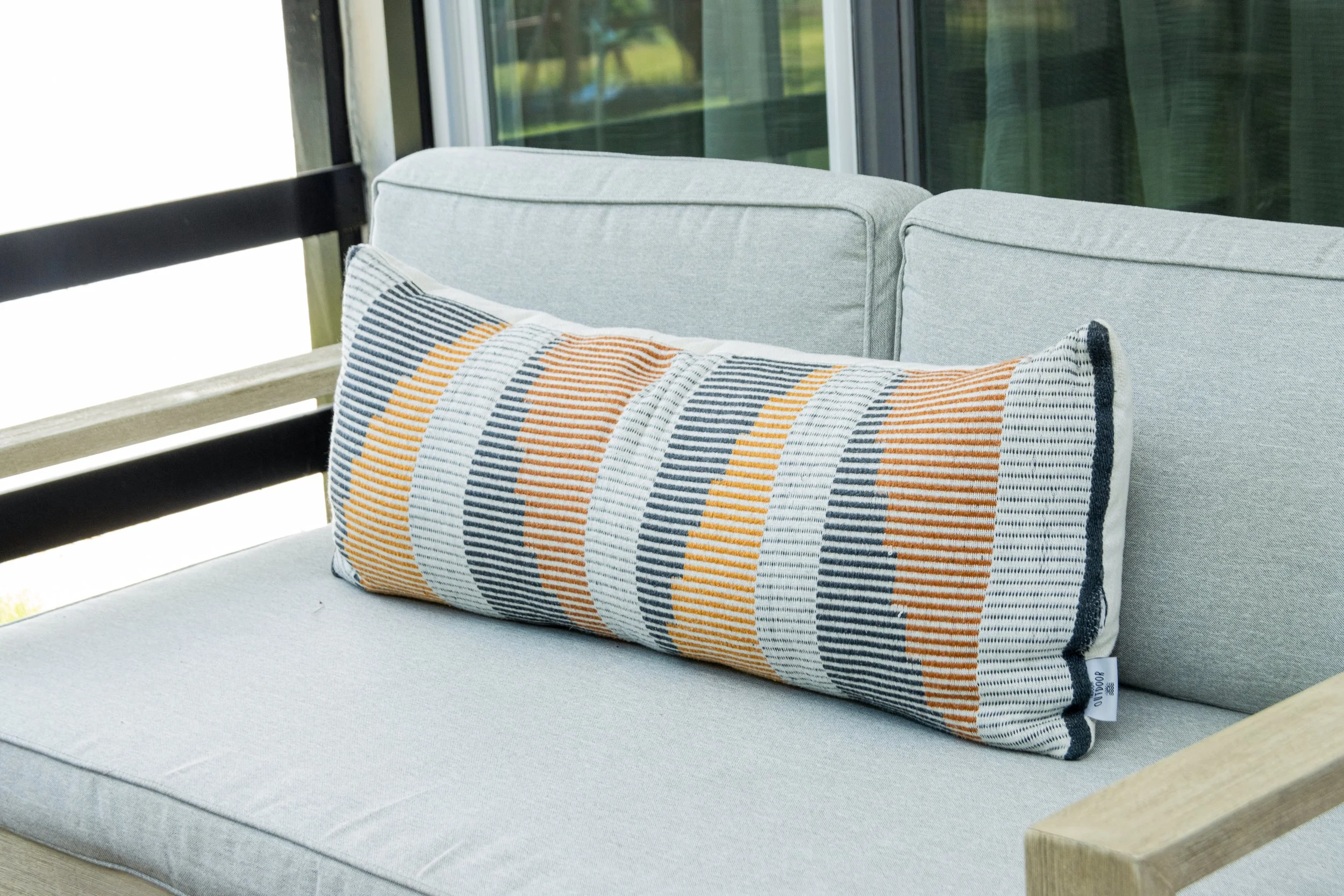
That brief guided every decision. Weathered wood furniture with clean, generous lines that complement the natural light rather than fight it. Linen cushions in soft, quiet tones that don't interrupt the green beyond the screens. A jute rug that grounds the seating area and brings another layer of natural texture underfoot. Simple, intentional styling… nothing busy, nothing decorative for its own sake.
The result is a room that knows exactly what it's for.
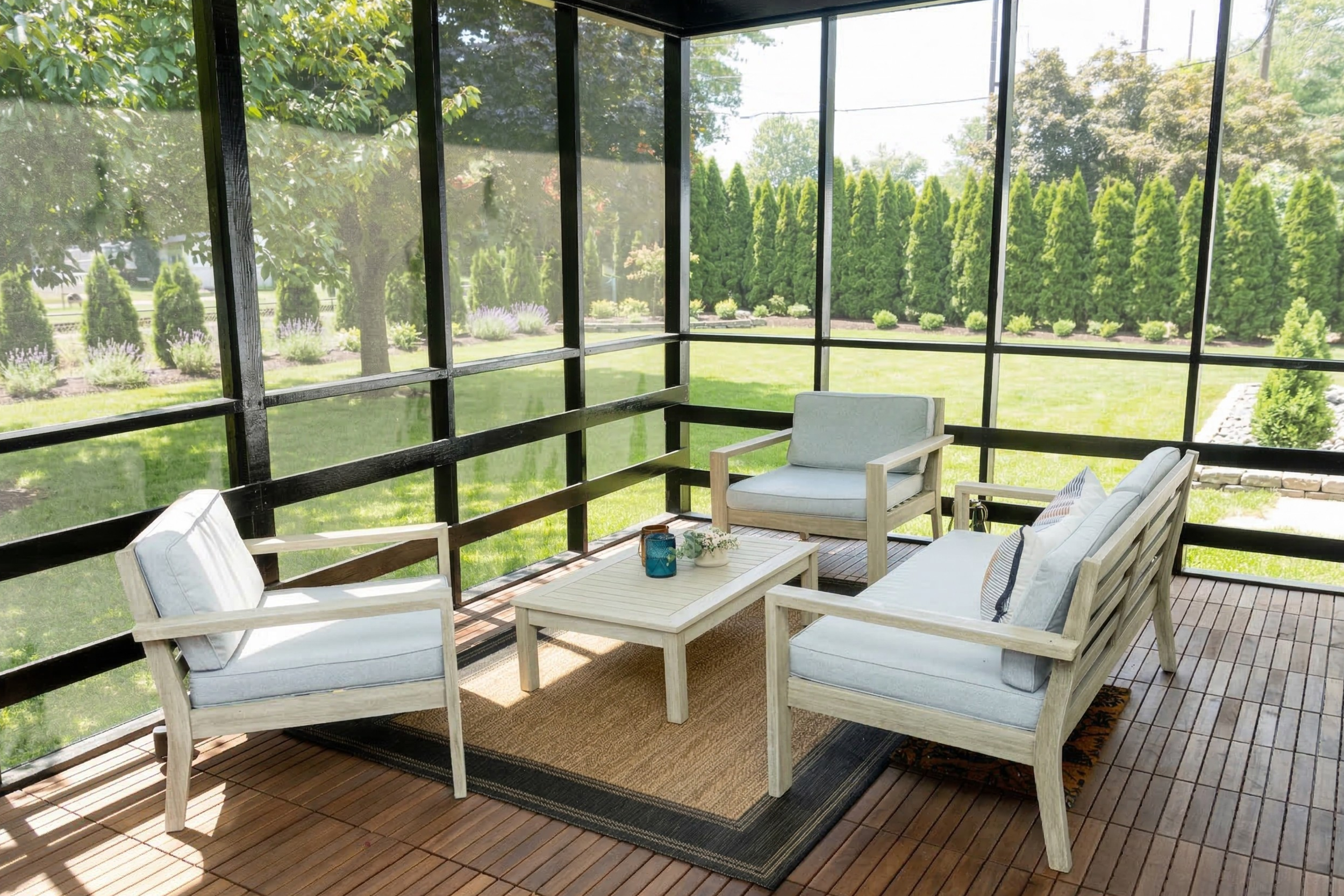
Now she takes her client calls from that room when she works from home. She sits in it on weekend mornings with her coffee while the kids play in the yard. It's where she decompresses between sessions. It's where she exhales.
"This is my favorite room in the house," she told me. Coming from a therapist, someone who understands better than most what it means to restore yourself. That meant everything.
What this means for your home
There's a version of design that gets everything technically right and still misses the point entirely. The finishes, the square footage, the price tag - none of that is what makes a home feel like one. I've walked into houses finished with materials most people only see in magazines and felt absolutely nothing. And I've walked into modest spaces that stopped me completely because someone had designed them with real intention around how they needed to feel.
That's the difference I care about. Not the cost of the finish. The feeling when you walk in.
Before you think about a single piece of furniture or a paint color, ask yourself this: what do I want to feel in this room? Not what do I want it to look like. How do I want it to feel at the end of a long day? What does this space need to do for me?
Once you're clear on the feeling, every decision follows. The materials, the scale, the lighting, the texture, the scent all of it becomes intentional rather than accidental. That's the shift from designing a room that photographs beautifully to designing a room that changes how you actually live inside it.
Your home should be giving back to you. Every single day. That's not a luxury, it's the whole point.

→ Ready to design a space that actually works for you? Let's start the conversation. Begin your Design Path here.
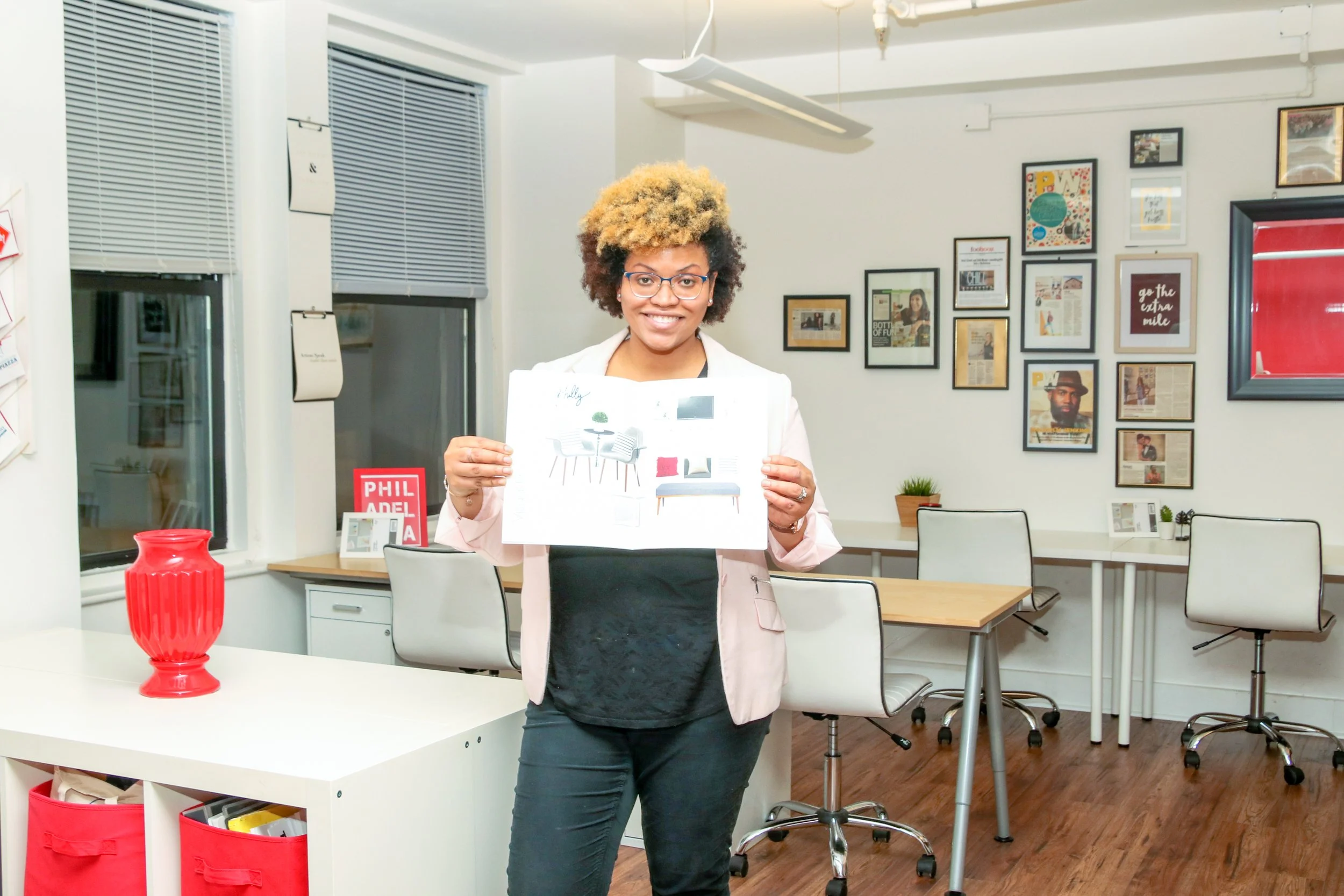
11 Years of Georgette Marise
April marks 11 years of Georgette Marise… and sitting with that feels both grounding and a little surreal.
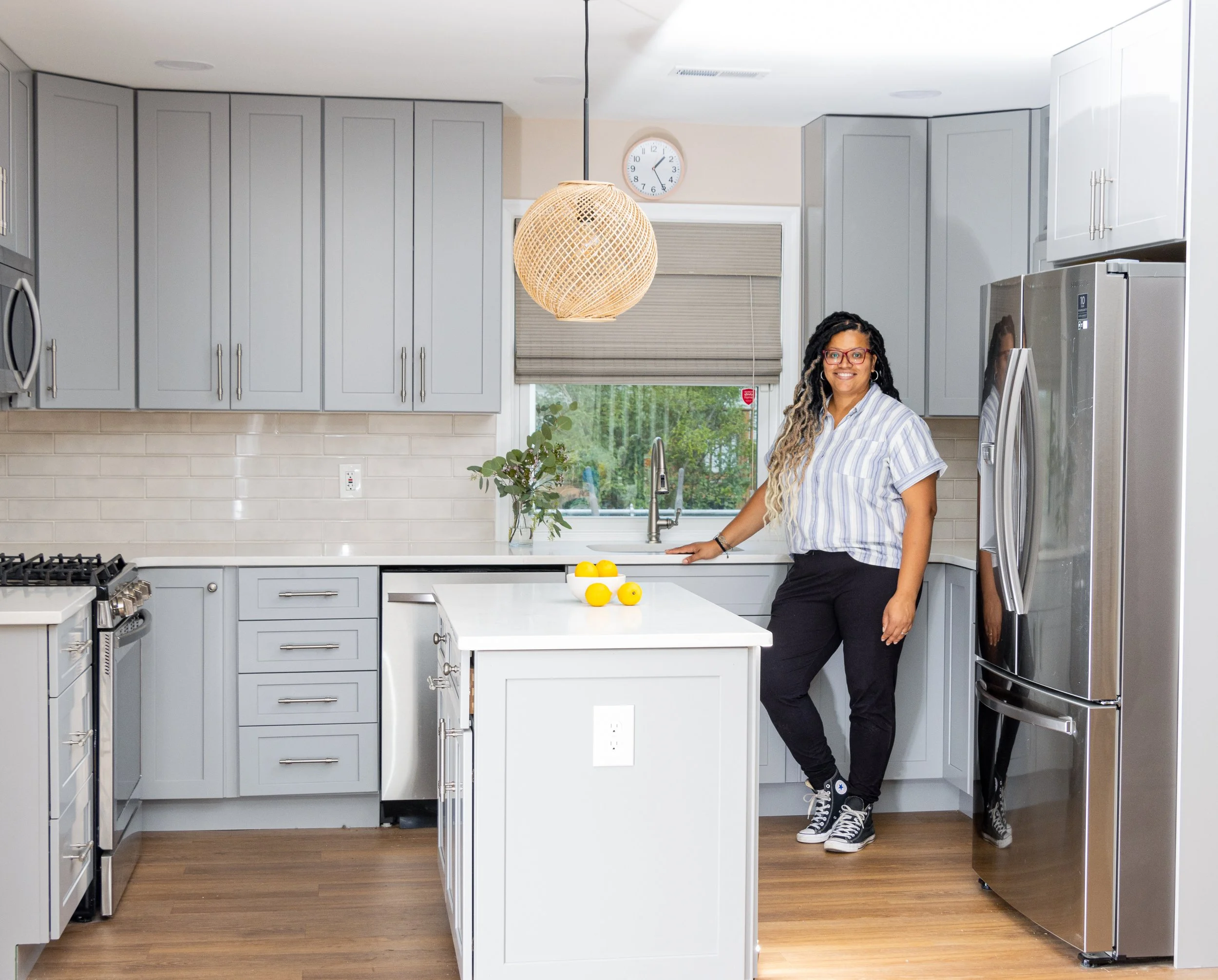
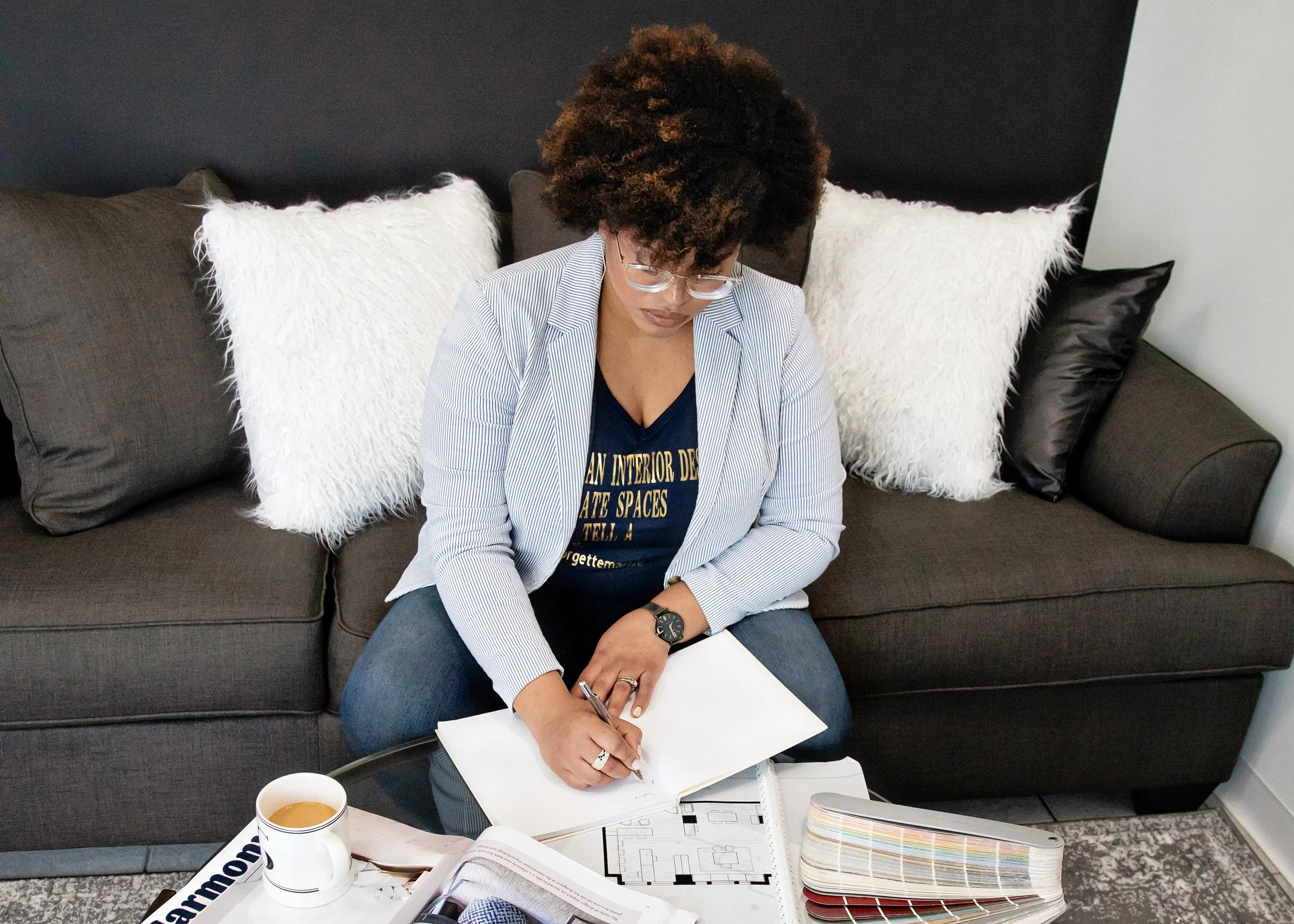
Recently, I went back through old brand photos, something I don’t do often enough, and I had to laugh a little. The hairstyles, the glasses, the outfits… every version of me thought she was doing her thing. LOL.
Some seasons I looked more polished, some I was clearly figuring it out as I went. But every version of me was building something. Learning something. Becoming.
And that part means a lot to me.







The Part People Don’t Always See
From the outside, interior design can look like a beautiful, curated career. Pretty spaces, finished rooms, styled photos. And yes, those moments are real. They’re rewarding in ways that are hard to explain. But what people don’t see is everything it takes to get there.
This work asks a lot of you.
It’s research - constantly staying on top of new materials, products, and innovations.
It’s understanding how people live, what they need, and sometimes what they can’t yet articulate.
It’s translating ideas into something tangible, functional, and deeply personal.
It’s presentation, problem-solving, pivoting when things don’t go as planned (because they won’t always).
It’s building systems, managing timelines, navigating challenges, and holding space for your clients throughout the process.
And some days, it takes everything - mentally, physically, emotionally.
There have been long days. Moments of doubt. Times where I’ve had to stretch beyond what felt comfortable and trust that I would figure it out.
But Then…There Are These Moments
When a home comes together in a way that feels effortless but you know how much intention went into every detail. When a client walks into the rooms in their home and exhales. When they say, “I couldn’t have done this without you. You got me.” That feeling never gets old. It’s still one of the most meaningful parts of what I do.
Looking back over these 11 years, I’m deeply grateful. For every client who trusted me. For every lesson, every challenge, every version of myself that kept showing up and choosing to grow. April feels like both a reflection and a reset. A moment to honor what’s been built—and to look ahead with quiet excitement for what’s next. Because I’m still evolving. Still learning. Still dreaming.
And still showing up 🤍
If you’ve been following along, supporting, or trusting me with your spaces, thank you. Truly.

Should I Stay or Should I Go? The Question Every Homeowner Eventually Asks
There's a moment I've witnessed more times than I can count.
A homeowner walks me through their home (sometimes proudly, sometimes apologetically) and somewhere between the front door and the back bedroom, they pause. They look around. And then they say some version of the same thing:
"I love this house. But I'm not sure it loves me back anymore."
It's not a real estate question. It's not even really a design question. It's something deeper, a feeling that the place you've built your life inside has quietly stopped fitting the life you're actually living.
As an interior designer, I've spent years helping homeowners in Southeastern Pennsylvania and beyond figure out what their rooms need. And if there's one thing I've learned, it's this: the question of whether to renovate or sell is almost never just about the house.
The Crossroads Nobody Prepares You For
We talk a lot about the financial side of this decision. Square footage. Comparable sales. Renovation ROI. And yes, all of that matters. We'll get there.
But before the spreadsheets, there's something else going on. There's the Sunday morning you spent scrolling Zillow even though you told yourself you weren't looking. The contractor quote that made your stomach drop. The neighbor who just sold for a number that made you wonder. The guest room that became a storage room that became a symbol of everything you meant to do but didn't.
The crossroads is emotional before it's financial. And if you try to make a purely financial decision about something this personal, you'll either talk yourself into the wrong choice or talk yourself out of the right one.
So before we talk numbers (and we will) I want to start where I always start with clients: with the feeling.
What Are You Actually Tired Of?
This is the first question I ask. Not "what do you want to change" — but what are you tired of.
There's a difference. Tired of the kitchen layout is a renovation conversation. Tired of the commute, the school district, the neighborhood that used to feel like yours…that's a different conversation entirely. No renovation fixes a zip code.
When I sit with a homeowner and really listen, one of two things tends to emerge. Either they're tired of specifics: the dark hallway, the master bath that never got updated, the open floor plan they thought they wanted but actually hate…or they're tired of something bigger. Something the house itself can't solve.
Getting honest about which one it is? That's the starting point. And it's harder than it sounds, because sometimes we convince ourselves we're tired of the house when we're actually just tired. And sometimes we convince ourselves we just need a change of scenery when what we really need is to finally make this place ours.
Georgette Marise Interiors
The Designer's Honest Take
Here's what I see from where I stand.
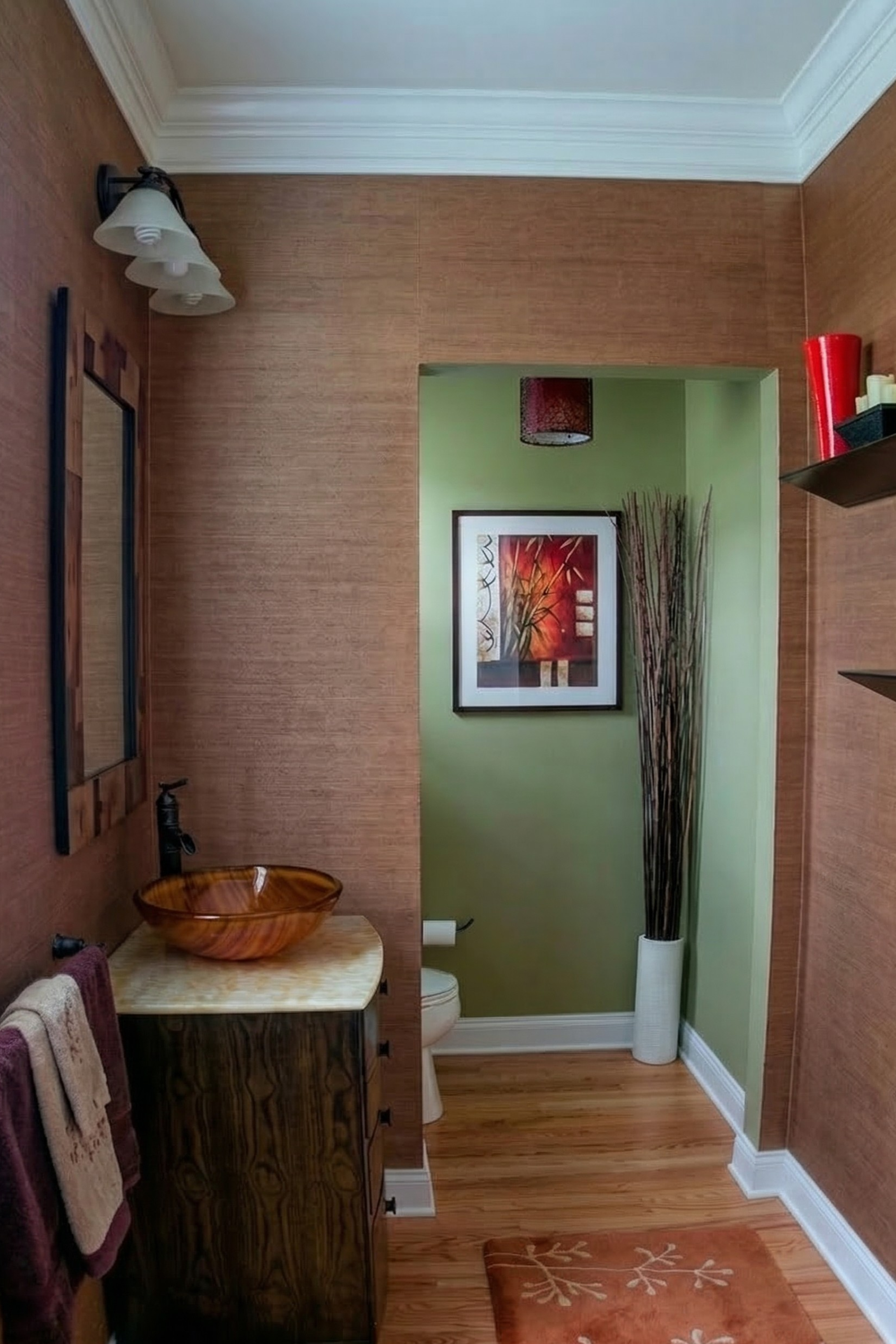
People underestimate what a home can become. I walk into rooms all the time that feel hopeless to the people living in them. Whether they’re too dark, too chopped up, too stuck in 2003 — and I see potential with the right intervention. Not a gut renovation. Not a second mortgage. Sometimes it's a wall coming down. Sometimes it's light. Sometimes it's just making decisions that were never made in the first place.
Renovating well is an act of intention. It's saying: I am choosing this home. I am investing in this life. I am going to make this place actually mine. When it's done thoughtfully with a clear vision, a realistic budget, and the right guidance it can be transformative in ways that have nothing to do with resale value.
But I also see the other side.
I've worked with clients who renovated because they couldn't face the decision. Who spent money updating a house they were never going to love because it was easier than admitting they'd outgrown it. Who finished the project and felt…nothing. Because the problem was never the kitchen.
A renovation can change a home. It cannot change what the home means to you. And it cannot change the life happening outside of it.
The Question Underneath the Question
In my experience, the homeowners who are most stuck at this crossroads aren't stuck because they don't have enough information. They're stuck because they haven't asked themselves the real question yet.
Which is this: What do I actually want my life to look like — and can this home support that?
Not the life you have right now. The life you're trying to move toward. The way you want to feel when you walk in the door after a long day. The space you want your kids to grow up in, or your parents to visit, or your mornings to unfold. The version of home that matches the version of yourself you're becoming.
That question changes everything. Because sometimes the answer is: yes, this house can be that with the right changes. And sometimes the answer is: no. And no amount of shiplap, paint, or wallpaper is going to fix it.
What Comes Next
This is exactly the conversation I want to have with you in person, face to face, over a cup of coffee.
On Thursday, March 26th at 10am, I'm sitting down at Maman (Suburban Square) in Ardmore, PA with Melissa Zimmerman, an interior designer and licensed realtor with Serhant for a free, intimate Q&A we're calling Renovate or Sell?
You get one question. We give it our full attention. No pitch, no pressure just two professionals who have guided a lot of homeowners through this exact crossroads, ready to help you think it through.

Melissa Zimmerman, Serhant + interior designer Sabine Hayes
We'll have free digital guides for every attendee covering real renovation costs at every budget level and the true cost of listing your home. And there's something else we're only sharing with the people in the room.
Coffee is on us.
If you've been sitting on a question about your home, this is your moment.
Ready to ask your question in person? Join us March 26 in Ardmore…it's free. → Reserve your seat
A Home Is Not a Performance
A Women’s History Month Reflection
Last month, I wrote about Paul R. Williams and the kind of luxury that endures.
His commitment to excellence.
His integrity.
His restraint.
And in that piece, I shared something I hear often from women:
“My house doesn’t feel personal.”
“I’ve saved a thousand Pinterest photos, but I’m still stuck.”
“I want calm… but I don’t know how to create it.”
Today, during Women’s History Month, I want to continue that conversation.
Because I’ve realized something deeper.
Many women don’t feel disconnected from their homes because they lack inspiration.
They feel disconnected because they are aiming for perfection.
The Magazine Illusion
We’ve been conditioned to admire the finished look.
The hotel aesthetic.
The styled coffee table.
The immaculate kitchen with nothing out of place.
And while there is beauty in finesse (in proportion, detail, and refinement) what we often forget is this:
A magazine is staged.
A hotel is transient.
A home is lived in.
When you try to replicate a space designed for photography or temporary stays, you can unintentionally erase the very thing that makes your home yours.
Perfection can feel polished.
But it can also feel impersonal.
A Home Is Always Becoming
Here’s the truth most design magazines won’t tell you:
A home is never finished.
It is layered over time.
It shifts with seasons of life.
It responds to growth, change, and new rhythms.
Instead of chasing a final reveal moment, what if you embraced the idea that your home is always becoming?
Not incomplete.
But unfolding.
The pressure to “arrive” at a perfectly styled space often keeps women frozen.
Waiting for the right sofa.
The perfect layout.
The final touch.
But beauty rarely arrives all at once.
It gathers.
Refinement Without Rigidity
When I think about the kind of luxury I believe in, the kind Paul R. Williams embodied, I think about restraint and integrity.
His spaces were detailed and refined.
But they were designed for living.
Luxury does not require sterility.
It does not demand that you hide your life.
True refinement makes room for reality.
It is possible to create a home that feels elevated and welcoming.
Curated and comfortable.
Structured and soulful.
The key is intention.
A thoughtful layout that supports how you actually move through your day.
Materials that age gracefully.
Layers that reflect your story, not just a trend cycle.
Finesse is not the absence of life.
It is the thoughtful framing of it.
What Makes a Home Feel Personal
It isn’t perfection.
It’s presence.
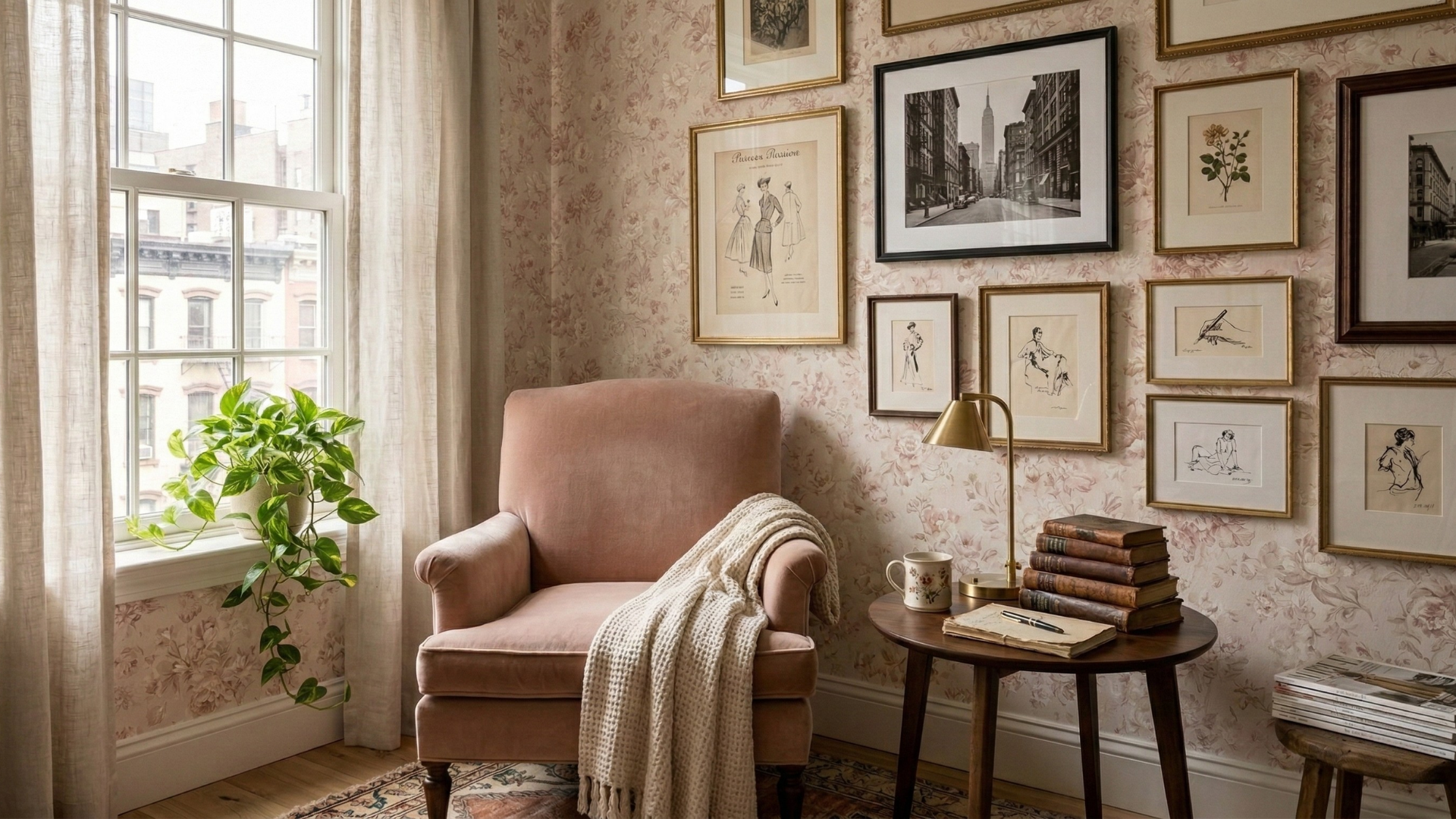
The art that reflects your heritage.
The books you return to.
The chair where conversations linger.
The table that holds both work and dinner.
Personality is what transforms a house into a home.
And personality requires permission.
Permission to shift things around.
Permission to edit slowly.
Permission to design in seasons instead of sprints.
A Picture of Possibility
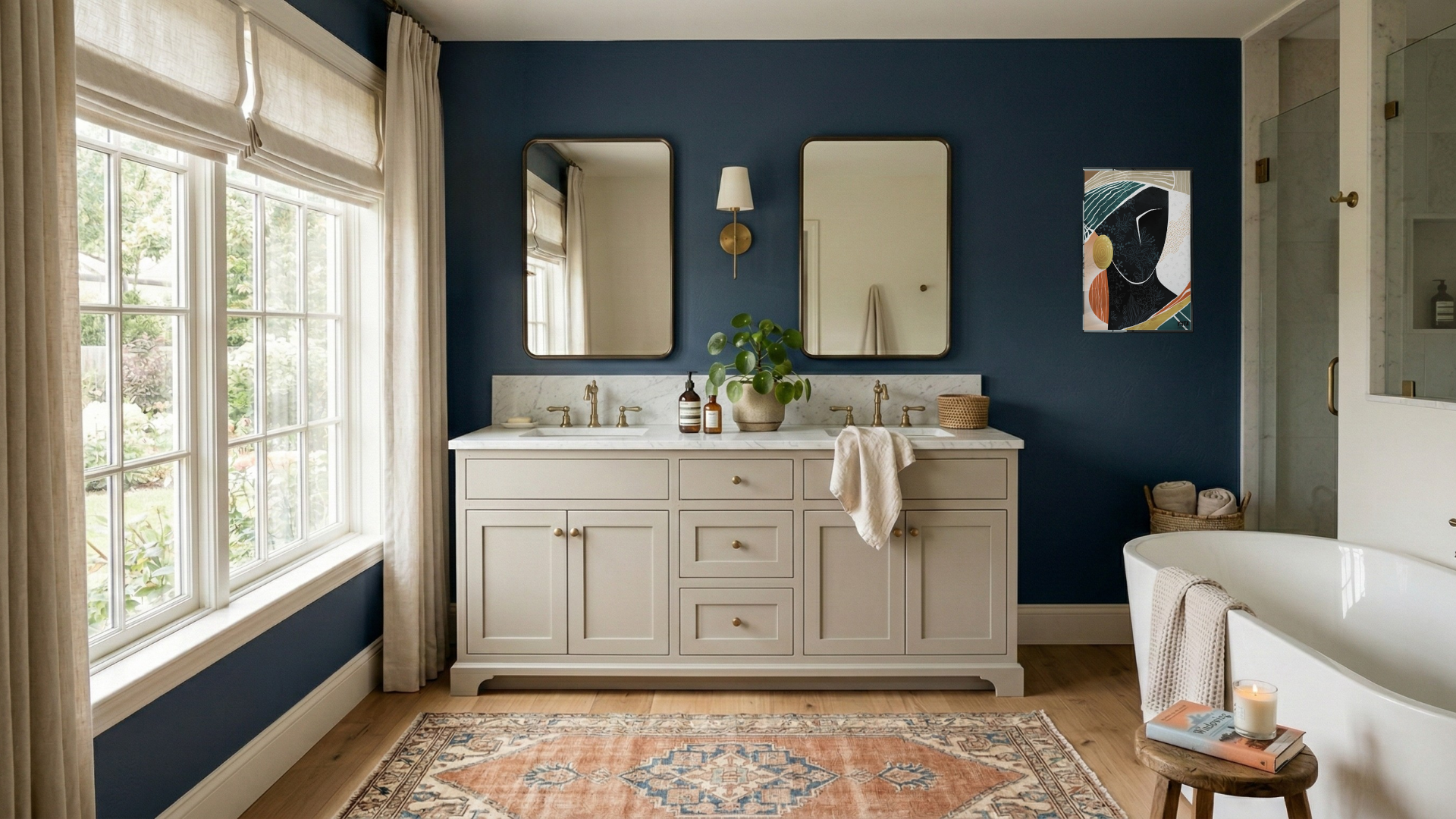
Imagine walking into a room that feels calm not because it is untouched, but because it is aligned.
The sofa supports your posture and your lifestyle.
The lighting softens the edges of the day.
The layout allows your home to breathe.
There is refinement.
But there is also warmth.
Nothing feels staged.
Nothing feels forced.
It feels like you.
That is possible.
Not through perfection but through clarity.
This Women’s History Month
We celebrate women who built, led, nurtured, and created — often without applause.
Your home is no different.
It does not need to be a showroom to be worthy.
It needs to support your becoming.
And if you’ve been waiting for the “perfect” moment to design your space, consider this your permission to begin where you are.
Your home is not a performance.
It is a reflection.
And reflections are allowed to change.
The only thing they need is direction.
Because becoming doesn’t happen by accident.
It happens with intention and with a plan.
If you’re ready to move beyond inspiration and design a home that truly supports your life, this is where we begin.
The Design Path is my guided framework that helps you move from overwhelm to clarity aligning layout, function, and aesthetic so your home feels refined, personal, and deeply livable.
Not perfect.
But purposeful.
Because your home isn’t meant to impress the world.
It’s meant to support you.
With intention,
Sabine
Black Architects and Interior Designers Who Inspire Intentional Homes Today
During Black History Month, we often talk about supporting Black-owned businesses.
And that matters.
But this year, I want to talk about something deeper.
As a Haitian American designer, the daughter of a Haitian mother and Cuban father, I carry legacy in everything I create. I think about resilience. Craftsmanship. Hospitality. Story.
And I think about how Black architects and interior designers have shaped the way we experience home in America, often without recognition.
Because here’s the truth:
Our homes, the way they function, feel, and flow have been influenced by Black brilliance for generations.
Because design is more than aesthetics.
It’s about effective problem solving.
It’s about storytelling without words.
And as a homeowner, especially as a woman shaping the emotional tone of your home, if your home doesn’t feel aligned right now, that conversation matters.
Why So Many Women Feel Disconnected From Their Homes
Right now, many women tell me
My house doesn’t feel personal.
I’ve saved a thousand Pinterest photos, but I’m still stuck.
I want calm… but I don’t know how to create it.
The real problem isn’t a lack of inspiration.
It’s a disconnection.
And that’s where history quietly guides us.
Let me show you what I mean.
Paul Revere Williams: Designing Luxury That Felt Livable

Photo Source: The Crisis, Vol 14 No 2, June 1917 (page 83)
The more I learn about Paul R. Williams, the more inspired I become.
Paul R. Williams was one of the most influential architects in American history, designing over 3000 buildings and homes in the Los Angles area. He was the first African American member of the AIA (American Institute of Architects) in 1923.

Blackburn Residence, Paul R. Williams, Architect 1927
Source: MichaelJLocke
He didn’t design for just one type of client. He designed affordable housing for everyday families and he also designed for Hollywood icons like Frank Sinatra, Lon Chaney, Lucille Ball and Desi Arnaz to name a few. He helped shape the elegance of Los Angeles itself, including work on the legendary Beverly Hills Hotel, even contributing to its iconic signature identity.
His range alone is extraordinary.
But what moves me most is this:
During segregation, many white clients refused to sit beside him. So he mastered drawing upside down across the table, sketching detailed architectural plans while facing them.
The discipline.
The composure.
The excellence.
He didn’t allow exclusion to limit his excellence, he led with charm, class, and grace.
And here’s why that matters to you as a homeowner.
Paul R. Williams understood that design is not about status. It’s about experience.
Whether he was designing a modest home or a grand estate, his spaces felt balanced, elegant, and welcoming. They were elevated but livable.
That is what I mean when I talk about approachable luxury.
Not excess.
Not intimidation.
Not rooms you’re afraid to sit in.
And as women carrying full lives - careers, children, marriages, aging parents, dreams, responsibilities - we don’t need homes that perform.
We need homes that restore.
We need rooms that hold us with the same level of intention and care Paul R. Williams brought to every drawing - even when the world made it harder.
Luxury should feel like walking into a space that understands you.
Paul R. Williams designed with that level of care even when the world made it harder.
And that kind of intention is timeless.
Norma Merrick Sklarek: Structure Creates Peace
Norma Merrick Sklarek was the first Black woman licensed as an architect in both New York and California. She helped execute large-scale projects like the Pacific Design Center and the U.S. Embassy in Tokyo, complex buildings that required precision and mastery.
She was known not for flash, but for discipline.
For making sure bold ideas could actually stand.
We naturally gravitate toward the visible elements first…
the sofa that makes a statement.
the paint color that feel fresh.
They shape the aesthetic and bring personality.
But it’s the invisible decisions - spatial planning, layout, proportion, function, and storage that determines whether a room truly supports you.
As women, we often carry the invisible load of our homes. If the systems don’t work, we feel it first.
Norma’s legacy reminds me of something essential:
Calm isn’t accidental.
It’s engineered.
A peaceful home begins with thoughtful layout, intentional furniture placement, and functionality that supports your real life.
Beauty matters.
But structure sustains it.
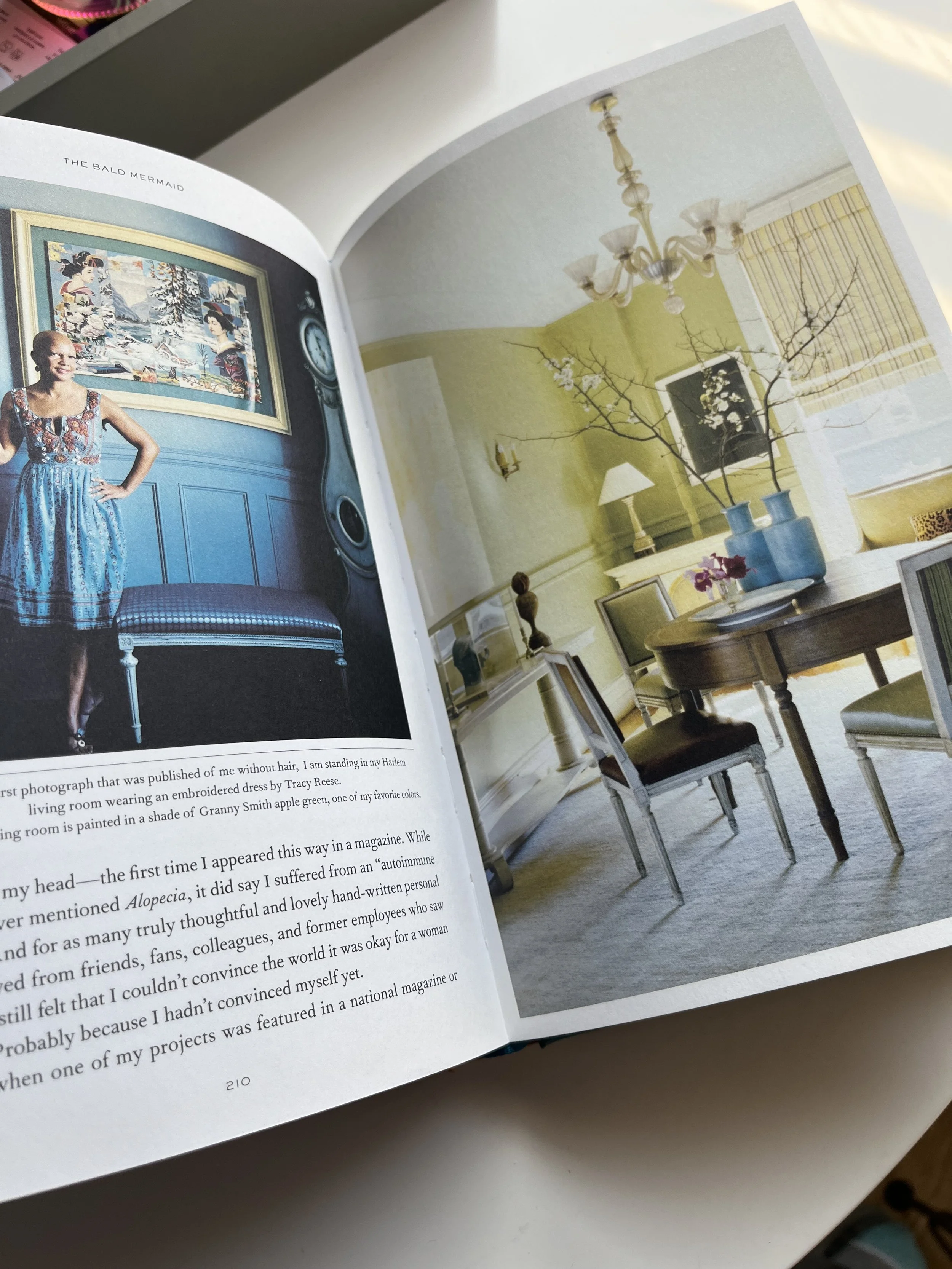
Sheila Bridges: Cultural Storytelling Through Interior Design
Sheila Bridges is one of today’s most influential interior designers.
She took the traditional French toile pattern, long associated with European pastoral scenes, and reimagined it through the lens of Black life and culture.
She didn’t just design wallpaper.
She reclaimed narrative.
That kind of confidence in storytelling through interiors is powerful.
.jpg)
Design becomes powerful when it reflects lived experience.
Because here’s the quiet question many women wrestle with:
Does my home reflect who I am or who I think it’s supposed to impress?
Your heritage, your upbringing, your memories, your traditions - they deserve presence in your space.
Not in a loud way.
Not in a forced way.
But in a way that feels honest.
When design reflects your culture and lived experience, it doesn’t just look beautiful.
It feels anchored.
And anchored spaces create emotional security.
Designing With Intention in Your Own Home
Black architects and designers throughout history understood something profound:
Space shapes experience.
And you have the power to shape yours.
If your home feels disconnected right now, begin here:
Remove one item that no longer feels aligned.
Add one object that reflects your heritage or a meaningful memory.
Rearrange one room based on function before aesthetics.
Design is not about copying trends.
It’s about curating identity.
This Black History Month
But also recognize the deeper legacy, the architects and designers whose resilience and brilliance shaped how America lives inside its homes.
And then ask yourself:
What story is my home telling?
As women, we deserve homes that feel like sanctuary not performance.
Homes that are calm, multifunctional, and layered with meaning.
Homes that tell our story.
If you’re ready to create a home that reflects who you are becoming, I invite you to begin with clarity and purpose. The Design Path is where we begin →